Choosing between wood and metal gazebo tents for your patio involves weighing distinct advantages in durability, maintenance, and aesthetic appeal. Wood gazebos offer a classic, customizable look with a lifespan of 15-30 years with proper care, but require significant maintenance. Metal gazebos, particularly those made from powder-coated steel or aluminum, provide superior durability, minimal upkeep, and a modern aesthetic, often lasting 15-25 years or more. The optimal choice depends on your desired style, maintenance commitment, and local climate conditions.
Popular Gazebo Tent Types
Gazebo tents come in a variety of forms, each designed to meet different needs and preferences for outdoor living. Understanding these distinctions is crucial when selecting the ideal structure for your patio.
Fixed Gazebo Tent
Fixed, or permanent, gazebo tents are robust structures designed to become an integral part of your outdoor landscape. These are typically anchored securely to the ground, offering superior stability and resistance to harsh weather conditions. Often constructed from high-quality wood or heavy-duty metal, permanent gazebos are built for consistent, long-term use, providing a reliable shelter that enhances your property’s value and aesthetic appeal. They are perfect for creating dedicated outdoor living spaces, such as an elaborate dining area or a serene meditation nook, that can be enjoyed year-round. For browse all gazebo tents articles on this site.
Portable Gazebo Tent
In contrast, portable gazebo tents prioritize flexibility and ease of use. These lightweight structures feature collapsible frames, often made from aluminum or lighter steel, and are typically covered with a fabric canopy. Portable gazebos are designed for temporary shade solutions, making them ideal for picnics, tailgating, garden parties, or any event where quick setup and takedown are essential. While they offer unparalleled convenience and can be easily stored away, their lighter construction means they are generally less resilient against strong winds and heavy precipitation compared to their fixed counterparts.
Semi-Permanent Gazebo Tent
Bridging the gap between the fully permanent and highly portable options are semi-permanent gazebo tents. These structures often feature sturdy metal frames, frequently made from powder-coated steel or aluminum, combined with durable hardtop roofs made of materials like galvanized steel or polycarbonate panels. Semi-permanent gazebos offer significantly more stability and weather resistance than pop-up models, without the full-scale construction commitment of a permanent wooden structure. They are excellent for those seeking a more robust, long-lasting patio solution that can still offer some flexibility, such as being disassembled and stored during extreme off-seasons or relocated if needed, providing a blend of durability and practicality.
Pros and Cons of Gazebo Tents
Choosing between wood and metal for your gazebo tent involves weighing their respective advantages and disadvantages. Each material presents a distinct set of characteristics that impact its suitability for different environments and user expectations.
Wood Gazebos
|
Our Picks for the Best Gazebo Tent in 2026
As an Amazon Associate I earn from qualifying purchases.
|
||
| Num | Product | Action |
|---|---|---|
| 1 | Alvantor® Screen House Gazebo, Pop Up Igloo Screened Canopy Tent with Mosquito Netting Sides, Instant UV Resistant Sun Shelter for Garden, Patio, Backyard 2-6-10-15 Person |

|
| 2 | Screen House Tent 12x12ft Screen Room Mesh Gazebos w/ 2 Zipper Doors, Camping Tent Screened Canopy Shelter for Outdoor Patios Backyards Activities |
|
| 3 | East Oak Screen House Tent Pop-Up, Portable Screen Room Canopy Instant Screen Tent 10 x 10 FT with Carry Bag for Patio, Backyard, Deck & Outdoor Activities, Beige |
|
| 4 | LEEDOR Pop Up Screen House, 6-10-15 Person Outdoor Screen Tent,Camping Screen Room with Carry Bag, Screened Gazebo with Mosquito Netting, Instant UV Resistant Sun Shelter for Garden, Patio, Backyard |
|
| 5 | Gazelle Tents™, G6 6-Sided Portable Gazebo, Easy Pop-Up Hub Screen Tent, Durable, TriTech Mesh, Waterproof, UV Resistant, 8-Person & Table, Desert Sand, 86" x 124" x 124", GG602DS |
|
| 6 | Alvantor® Screen House Gazebo, Pop Up Igloo Screened Canopy Tent with Mosquito Netting Sides, Instant UV Resistant Sun Shelter for Garden, Patio, Backyard 2-6-10-15 Person |
|
| 7 | East Oak 12×12 FT Pop Up Canopy Tent with Mesh | Outdoor Screen House with 6 Sunshades | Instant Canopy with Portable Carry Bag | Gazebo Tent for Camping, Patio, and Beach | Beige |
|
| 8 | VEVOR 6 x 6 ft Pop up Screen House Tent, 4-6 Person Portable Screen Gazebo, with Carry Bag, Netting Sides & Ground Stakes, Quick Setup, Screened Canopy for Garden, Patio & Backyard, and Outdoor, Beige |
|
| 9 | Alvantor® Screen House Gazebo, Pop Up Igloo Screened Canopy Tent with Mosquito Netting Sides, Instant UV Resistant Sun Shelter for Garden, Patio, Backyard 2-6-10-15 Person |
|
| 10 | 12'x12' Camping Screen Tent - Portable Screen Canopy 8-10 Person&Instant UV Resistant Sun Shelter,Easy to Set Up&Mosquito Net Tent&Waterproof,Suitable for Family Camping Trip,Backyard,Picnic |
|
Wooden gazebo tents exude a timeless charm and natural warmth that many homeowners find irresistible. Their organic aesthetic seamlessly integrates with garden landscapes and traditional architectural styles, offering a classic focal point for any outdoor space.
Advantages
One of the most significant advantages of wood is its natural beauty and ability to create a warm, inviting atmosphere. Wood gazebos offer extensive customization options, allowing you to stain, paint, or carve them to perfectly match your home’s exterior or personal taste. With proper care, certain woods can be incredibly durable, providing a sturdy structure that can last for many decades, often maturing beautifully with age to develop a rich, weathered patina that enhances its rustic appeal.
Disadvantages
Despite their aesthetic appeal, wooden gazebos demand considerable maintenance. They require regular staining, sealing, or painting to protect against moisture damage, rot, insect infestations, and UV degradation. Without consistent upkeep, wood can warp, crack, or fade, significantly shortening its lifespan. The initial cost for a high-quality wooden gazebo can also be higher, and its heavy construction makes it less portable and more challenging to install or relocate compared to metal options.
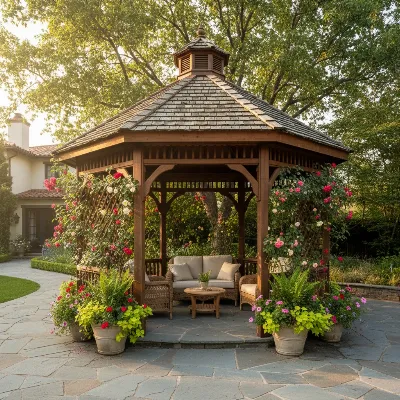 A beautiful, traditional wooden gazebo tent on a spacious patio, surrounded by lush greenery and flowers, with warm sunlight filtering through the structure.
Metal Gazebos
Metal gazebo tents, typically constructed from aluminum or steel, offer a contemporary aesthetic and are celebrated for their strength and low maintenance requirements. They present a sleek alternative to wood, fitting well into modern and minimalist outdoor designs.
Advantages
Metal gazebos are renowned for their exceptional durability and structural strength, capable of withstanding various weather conditions, including strong winds, heavy rain, and snow, especially with powder-coated finishes. They generally require minimal maintenance, often needing just occasional cleaning and check-ups for rust prevention, which is a significant advantage for busy homeowners. Their modern design, characterized by clean lines and often darker tones, makes them a perfect fit for contemporary landscapes, providing a sophisticated focal point with a long lifespan of 15 to 20 years or more with proper care. Many models also come with functional add-ons like curtain rails and mosquito netting for enhanced comfort.
Disadvantages
While highly durable, metal gazebos can sometimes feel less “natural” or blend less seamlessly into very rustic garden settings due to their industrial appearance. Metal surfaces, particularly roofs, can absorb and radiate heat under direct sunlight if not properly insulated, making the space beneath feel warmer. Steel, though stronger, is heavier and susceptible to rust if its protective coating is compromised, requiring diligent maintenance in humid or coastal environments. Aluminum is rust-resistant but generally not as strong as steel.
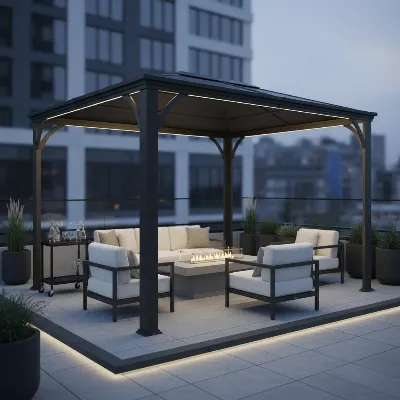 A sleek, modern metal gazebo tent on a contemporary patio, featuring clean lines and a dark finish, with comfortable outdoor furniture and ambient lighting.
Comparison Table of Gazebo Tents
Choosing between wood and metal gazebo tents for your patio ultimately depends on your priorities. This table offers a concise overview of key features to help you decide.
| Feature | Wood Gazebos | Metal Gazebos | Semi-Permanent Gazebos (Hardtop Metal) |
|---|---|---|---|
| Durability | High (with maintenance) | High | Very High |
| Portability | Low | High (for lighter models) | Medium |
| Upfront Cost | High | Lower to Mid-Range | Mid to High |
| Maintenance | High (stain, seal, treat) | Low (clean, inspect for rust) | Low (clean, occasional inspection) |
| Aesthetic | Natural, Traditional, Rustic | Modern, Sleek, Contemporary | Modern, Robust |
| Ideal Use | Permanent fixture, classic look | Temporary shade, events, modern patios | Robust, long-term patio solution with modern appeal |
| Lifespan | 15-30+ years (with care) | 10-20+ years (with care) | 15-25+ years (with care) |
Guide to Choosing Your Gazebo Tent
Selecting the perfect gazebo tent for your patio requires careful consideration of several factors to ensure it meets your needs and complements your outdoor space.
Determine Your Purpose
Before diving into materials, clarify how you envision using your gazebo. Will it be a tranquil spot for morning coffee, a vibrant outdoor dining area for entertaining, or a cozy lounge space for evening relaxation? Perhaps you need a sheltered area for a hot tub or an outdoor kitchen. Understanding its primary function will guide your choices in size, features, and durability. For instance, a dining area might benefit from a larger, more permanent structure, while a reading nook could be smaller and more intimate.
Choose the Right Size
Measure your available patio space carefully. A gazebo tent should not overwhelm your patio but rather enhance it, leaving enough room for comfortable movement. Consider the footprint of the gazebo, including any overhangs, and ensure there’s ample space for furniture and walkways around it. Think about the height as well, especially if you plan to incorporate ceiling fans or pendant lighting. A well-proportioned gazebo integrates seamlessly into your outdoor environment, making the space feel balanced and inviting.
Select the Right Material
This is often the most significant decision. If you gravitate towards a classic, organic look that blends with lush landscaping and desire extensive customization, wood might be your preference, provided you are prepared for its maintenance. For a sleek, contemporary aesthetic, minimal upkeep, and superior weather resistance, metal gazebos, particularly hardtop models, are an excellent choice. Aluminum offers rust resistance and lightness, while steel provides greater strength and stability, especially in windy conditions. Consider your local climate; wood may struggle in very humid environments without constant care, while metal can be a robust choice.
Consider the Frame Structure
The frame is the backbone of your gazebo tent, determining its stability and longevity. For wooden gazebos, look for pressure-treated lumber or naturally weather-resistant woods like cedar or redwood to combat rot and pests. Ensure joints are sturdy and well-constructed. For metal gazebos, steel frames offer exceptional strength, especially when powder-coated for rust prevention. Aluminum frames are lighter and naturally rust-resistant, making them easier to move but potentially less resistant to very heavy loads or extreme winds unless specifically designed for it. A robust frame is critical for enduring the elements and providing a safe, secure overhead structure.
Evaluate Other Amenities
Modern gazebo tents often come with a variety of features that enhance comfort and functionality. Consider options like built-in seating, privacy curtains, mosquito netting, or integrated lighting systems. A double-tiered roof can improve ventilation, which is particularly beneficial in warmer climates, allowing heat to escape while providing shade. Look for models with sturdy anchoring systems, especially for larger or semi-permanent structures, to ensure they remain secure during adverse weather. These additional features can significantly elevate your outdoor experience, making your gazebo a truly versatile space.
Reputable Gazebo Tent Brands
When investing in a gazebo tent, choosing a product from a reputable manufacturer can make a significant difference in quality, durability, and customer support. While specific brand availability can vary by region, generally, leading brands focus on robust construction, quality materials, and innovative designs. Look for manufacturers known for their use of durable, weather-resistant materials, comprehensive warranties, and positive customer reviews regarding ease of assembly and long-term performance. Researching brands that specialize in outdoor structures, paying attention to their material choices—whether premium treated wood, heavy-gauge powder-coated steel, or rust-resistant aluminum—will help ensure you select a product that lives up to its promise of enhancing your patio for years to come. Prioritizing brands with a strong commitment to craftsmanship and customer satisfaction will lead to a more reliable and enjoyable gazebo tent experience.
Tips for Gazebo Tent Maintenance and Cleaning
Proper maintenance is key to extending the life and preserving the beauty of your gazebo tent, regardless of whether it’s wood or metal. Regular care can prevent premature wear and ensure your outdoor haven remains an inviting retreat for many years.
Regular Cleaning
For wooden gazebos, routinely sweep away leaves, debris, and dirt from the roof and frame. Annually, use a mild soap and water solution with a soft brush to clean the wood, rinsing thoroughly to prevent soap residue. For metal gazebos, simple washing with a hose and a soft cloth is usually sufficient to remove dirt and grime. Pay attention to crevices where debris might accumulate. Regular cleaning prevents unsightly buildup and the potential for material degradation.
Seasonal Care and Protection
Wooden gazebos require more intensive seasonal care. Every one to two years, inspect the wood for signs of rot, cracking, or insect damage. Apply a fresh coat of wood stain, sealer, or paint to protect the timber from moisture and UV rays. This is crucial for preventing weathering and prolonging its life. For metal gazebos, inspect the frame for any chips in the powder coating or signs of rust. Touch up any damaged areas with rust-inhibiting paint to prevent further corrosion. In regions with harsh winters, consider covering your gazebo or, for portable models, disassembling and storing it indoors to protect against heavy snow loads and extreme cold.
Routine Inspections and Repairs
Perform regular structural inspections on both wood and metal gazebos. Check all bolts, screws, and fasteners to ensure they are tight and secure. Address any loose connections promptly to maintain structural integrity. For wooden gazebos, look for splintering or weakened boards and replace them as needed. For metal gazebos, examine the roof panels for any damage or leaks, and check that all canopy attachments or netting are in good condition. Addressing minor issues quickly can prevent them from escalating into more significant, costly repairs, ensuring your gazebo tent remains safe and functional.
“The longevity of any outdoor structure, particularly a gazebo tent, hinges significantly on consistent, proactive maintenance. Neglecting regular care, especially for wood, can halve its expected lifespan, turning an investment into a short-term solution.” – Alex Johnson, Outdoor Structure Specialist at ReviewKari.com
Conclusion
The choice between a wood and metal gazebo tent for your patio is a deeply personal one, influenced by your aesthetic preferences, maintenance willingness, and environmental factors. Wood offers unmatched natural beauty and customization, providing a traditional, warm ambiance that can truly become a cherished extension of your home. However, it demands a commitment to ongoing maintenance to protect its organic charm and structural integrity. Conversely, metal gazebos present a sleek, modern, and low-maintenance alternative, offering superior durability and weather resistance with minimal fuss.
Ultimately, the best gazebo tent for you will beautifully marry functionality with style, creating an outdoor space that perfectly suits your lifestyle. Consider the long-term vision for your patio, the climate you live in, and the level of care you’re prepared to provide. By carefully weighing these factors, you can confidently select a gazebo tent that not only enhances your outdoor living experience but also stands as a testament to thoughtful design and practical living. Which material will you choose to create your ideal patio oasis?
Frequently Asked Questions
Do wood gazebos last longer than metal gazebos?
The lifespan of both wood and metal gazebos can be extensive, but it largely depends on maintenance. Wooden gazebos can last 15-30 years or more with consistent staining, sealing, and protection from pests and rot. Metal gazebos, especially hardtop models made of powder-coated steel or aluminum, can also last 15-25 years or longer with minimal upkeep, primarily focused on preventing rust for steel frames.
Are metal gazebos prone to rust?
Steel-framed metal gazebos can be prone to rust, particularly if the powder-coated finish is chipped or scratched, exposing the metal to moisture. However, many high-quality steel gazebos come with rust-resistant coatings, and regular inspections and touch-ups can prevent significant corrosion. Aluminum gazebos are naturally rust-resistant, making them a low-maintenance option for humid or coastal areas.
Can I paint or stain a metal gazebo?
While wooden gazebos are easily customized with paint or stain, metal gazebos are typically finished with a powder coating that is durable and aesthetically pleasing. Painting a metal gazebo usually requires special primers and paints designed for metal to ensure proper adhesion and weather resistance. It’s generally less common and more challenging than painting wood.
How do I anchor a gazebo tent on my patio?
Most permanent and semi-permanent gazebo tents come with pre-drilled holes in their legs or bases for anchoring. You can secure them to a concrete patio or deck using heavy-duty bolts or lag screws. For added stability, especially in windy areas, ensuring a solid foundation and using appropriate anchoring hardware is crucial, often requiring professional installation.
Are portable gazebo tents stable in windy conditions?
Portable gazebo tents are generally designed for temporary use and may not be stable in strong winds without proper anchoring. Many come with stakes or ropes for securing them to the ground, but their lightweight nature makes them vulnerable to high gusts. For areas prone to wind, a more robust, semi-permanent or permanent hardtop gazebo is recommended for safety and longevity.
Frequently Asked Questions
Do wood gazebos last longer than metal gazebos?
The lifespan of both wood and metal gazebos can be extensive, but it largely depends on maintenance. Wooden gazebos can last 15-30 years or more with consistent staining, sealing, and protection. Metal gazebos, especially hardtop models, can also last 15-25 years or longer with minimal upkeep, primarily focused on preventing rust for steel frames.
Are metal gazebos prone to rust?
Steel-framed metal gazebos can be prone to rust if their powder-coated finish is chipped, exposing the metal to moisture. However, many high-quality steel gazebos have rust-resistant coatings, and regular inspections can prevent significant corrosion. Aluminum gazebos are naturally rust-resistant, making them a low-maintenance option for humid or coastal areas.
Can I paint or stain a metal gazebo?
While wooden gazebos are easily customized with paint or stain, metal gazebos are typically finished with a durable powder coating. Painting a metal gazebo usually requires special primers and paints designed for metal to ensure proper adhesion and weather resistance, making it generally more challenging than painting wood.
How do I anchor a gazebo tent on my patio?
Most permanent and semi-permanent gazebo tents come with pre-drilled holes in their legs or bases for anchoring. You can secure them to a concrete patio or deck using heavy-duty bolts or lag screws. For added stability, especially in windy areas, ensuring a solid foundation and using appropriate anchoring hardware is crucial.
Are portable gazebo tents stable in windy conditions?
Portable gazebo tents are generally designed for temporary use and may not be stable in strong winds without proper anchoring. Many come with stakes or ropes for securing them to the ground, but their lightweight nature makes them vulnerable to high gusts. For areas prone to wind, a more robust, semi-permanent or permanent hardtop gazebo is recommended for safety and longevity.
How to Choose Your Gazebo Tent
Selecting the perfect gazebo tent for your patio requires careful consideration of several factors to ensure it meets your needs and complements your outdoor space.
Clarify how you envision using your gazebo. Will it be a tranquil spot for morning coffee, an outdoor dining area, or a cozy lounge space? Understanding its primary function will guide your choices in size, features, and durability.
Measure your available patio space carefully. A gazebo tent should not overwhelm your patio but rather enhance it, leaving enough room for comfortable movement. Consider the footprint, including any overhangs, and ensure ample space for furniture and walkways.
If you prefer a classic, organic look and extensive customization, wood might be your preference, provided you are prepared for its maintenance. For a sleek, contemporary aesthetic, minimal upkeep, and superior weather resistance, metal gazebos, particularly hardtop models, are an excellent choice.
The frame is the backbone of your gazebo tent, determining its stability and longevity. For wooden gazebos, look for pressure-treated lumber or naturally weather-resistant woods like cedar or redwood. For metal gazebos, steel frames offer exceptional strength, especially when powder-coated for rust prevention, while aluminum frames are lighter and naturally rust-resistant.
Modern gazebo tents often come with a variety of features that enhance comfort and functionality. Consider options like built-in seating, privacy curtains, mosquito netting, or integrated lighting systems. A double-tiered roof can improve ventilation, which is particularly beneficial in warmer climates.

We were torn between wood and metal, but ultimately decided on a fixed gazebo tent made of aluminum. The durability and resistance to rust were key factors for us, living in a humid climate. It was a bit of an investment, but knowing it’s built to last 15-25 years makes it worthwhile. It’s a great spot for our morning coffee now.
We went with a powder-coated steel gazebo for our backyard, and it’s been fantastic. The minimal upkeep was a huge selling point for us, especially with two young kids. It looks really sleek and modern, and it’s held up perfectly through a few storms already. Definitely recommend metal if you’re looking for something durable and low-maintenance.
I opted for a wooden gazebo because I loved the classic look it offered. While it’s beautiful and really adds to our patio’s aesthetic, the maintenance is definitely a commitment. I’ve already had to re-stain parts of it after just a couple of years, which is a bit more work than I anticipated. It’s worth it for the style, but be prepared for the upkeep.
After reading about the lifespan differences, we chose a metal gazebo for our large family gatherings. We needed something that could withstand frequent use and wouldn’t require constant attention. It’s been perfect for hosting barbecues and birthday parties, providing excellent shade and a sturdy structure. Very happy with our decision!