Have you ever found yourself wrestling with a pop-up gazebo, wishing for an extra set of hands as time ticks by? Setting up a pop-up gazebo tent by yourself, especially when speed is of the essence, can seem daunting. Yet, with the right approach and a few expert tricks, transforming your outdoor space into a shaded oasis in under five minutes is entirely achievable. This comprehensive guide will arm you with the knowledge and practical steps to confidently erect your gazebo solo, ensuring a swift and stable setup for your next event or backyard gathering.
Types of Pop-Up Gazebos
Understanding the different types of pop-up gazebos can significantly impact your solo setup experience, as their design influences ease of assembly and overall portability. From basic models to more robust options, each offers unique features.
Standard Pop-Up Gazebos
Standard pop-up gazebos are typically lightweight and designed for casual use, such as backyard parties or beach trips. Their frames are often made from aluminum or steel, offering a balance of portability and durability. These models usually require the canopy to be attached after the frame is partially opened.
Heavy-Duty Pop-Up Gazebos
Heavy-duty pop-up gazebos are built with stronger frames, often reinforced with thicker steel, making them more resilient against wind and rain. While offering superior stability and longevity, their increased weight can make solo setup slightly more challenging, though not impossible with proper technique. These are ideal for market vendors or frequent event use.
Specialty Pop-Up Gazebos
This category includes gazebos with specific design enhancements, such as those with pre-attached canopies, which significantly streamline the setup process, especially for one person. Grill gazebos, designed for outdoor cooking, also fall here, often featuring built-in shelves and smoke vents. These specialized designs prioritize convenience and functionality.
Advantages and Disadvantages of Pop-Up Gazebos
Pop-up gazebos have become a staple for temporary outdoor shelter, but like any product, they come with their own set of pros and cons, particularly when considering solo assembly. Weighing these can help you choose the right model for your needs.
Advantages
Pop-up gazebos offer remarkable benefits, especially for individuals seeking quick, flexible outdoor solutions. Their inherent design prioritizes user convenience and adaptability.
- Speed and Ease of Setup: The primary draw of pop-up gazebos is their rapid deployment. Many models are engineered for near-instantaneous assembly, making them perfect for spontaneous gatherings or events where time is limited. With practice, a solo setup can often be completed in mere minutes.
- Portability: Designed to fold down compactly into a wheeled bag, these gazebos are incredibly easy to transport. This feature makes them ideal for campers, tailgaters, and anyone needing shade on the go.
- Versatility: From creating a shaded dining area in your backyard to providing shelter at a craft fair or sporting event, pop-up gazebos adapt to a multitude of uses. They offer a flexible solution for various outdoor needs.
Disadvantages
|
Our Picks for the Best Gazebo Tent in 2026
As an Amazon Associate I earn from qualifying purchases.
|
||
| Num | Product | Action |
|---|---|---|
| 1 | 12'x12' Camping Screen Tent - Portable Screen Canopy 8-10 Person&Instant UV Resistant Sun Shelter,Easy to Set Up&Mosquito Net Tent&Waterproof,Suitable for Family Camping Trip,Backyard,Picnic |

|
| 2 | East Oak 12×12 FT Pop Up Canopy Tent with Mesh | Outdoor Screen House with 6 Sunshades | Instant Canopy with Portable Carry Bag | Gazebo Tent for Camping, Patio, and Beach | Beige |
|
| 3 | Alvantor® Screen House Gazebo, Pop Up Igloo Screened Canopy Tent with Mosquito Netting Sides, Instant UV Resistant Sun Shelter for Garden, Patio, Backyard 2-6-10-15 Person |
|
| 4 | East Oak Screen House Tent Pop-Up, Portable Screen Room Canopy Instant Screen Tent 10 x 10 FT with Carry Bag for Patio, Backyard, Deck & Outdoor Activities, Beige |
|
| 5 | Alvantor® Screen House Gazebo, Pop Up Igloo Screened Canopy Tent with Mosquito Netting Sides, Instant UV Resistant Sun Shelter for Garden, Patio, Backyard 2-6-10-15 Person |
|
| 6 | LEEDOR Pop Up Screen House, 6-10-15 Person Outdoor Screen Tent,Camping Screen Room with Carry Bag, Screened Gazebo with Mosquito Netting, Instant UV Resistant Sun Shelter for Garden, Patio, Backyard |
|
| 7 | Screen House Tent 12x12ft Screen Room Mesh Gazebos w/ 2 Zipper Doors, Camping Tent Screened Canopy Shelter for Outdoor Patios Backyards Activities |
|
| 8 | VEVOR 6 x 6 ft Pop up Screen House Tent, 4-6 Person Portable Screen Gazebo, with Carry Bag, Netting Sides & Ground Stakes, Quick Setup, Screened Canopy for Garden, Patio & Backyard, and Outdoor, Beige |
|
| 9 | Alvantor® Screen House Gazebo, Pop Up Igloo Screened Canopy Tent with Mosquito Netting Sides, Instant UV Resistant Sun Shelter for Garden, Patio, Backyard 2-6-10-15 Person |
|
| 10 | Gazelle Tents™, G6 6-Sided Portable Gazebo, Easy Pop-Up Hub Screen Tent, Durable, TriTech Mesh, Waterproof, UV Resistant, 8-Person & Table, Desert Sand, 86" x 124" x 124", GG602DS |
|
Despite their convenience, pop-up gazebos also have limitations that users should be aware of, especially regarding their long-term durability and performance in harsh conditions. These aspects are important considerations.
- Less Durable than Permanent Structures: Unlike fixed gazebos made from wood or metal, pop-up versions, even heavy-duty ones, are not designed for permanent outdoor installation. Their lightweight construction makes them more susceptible to damage from prolonged exposure to the elements.
- Vulnerable to Extreme Weather: While offering protection from light rain and sun, most pop-up gazebos are not built to withstand strong winds, heavy snow, or severe storms. It’s crucial to take them down in adverse weather to prevent damage or injury.
- Can Be Tricky for Larger Models When Solo: While smaller pop-up gazebos are quite manageable for one person, larger 10×20 or even 10×10 models can become awkward and cumbersome for a single individual to set up. The sheer size and weight often make it difficult to expand the frame evenly or attach the canopy without assistance.
Solo vs. Two-Person Setup: The Reality
While many pop-up gazebo instructions suggest or even recommend two people for setup, achieving a quick solo assembly is often more about technique and preparation than sheer strength. It’s true that having an extra set of hands can simplify the process, especially with larger units, but a strategic approach can empower you to conquer the setup alone. The key lies in leveraging your body weight, using anchoring points, and understanding your gazebo’s specific locking mechanisms. “Many users find that even with a friend, understanding the ‘flow’ of assembly makes all the difference,” says an outdoor gear expert.
Step-by-Step: Your 5-Minute Solo Pop-Up Gazebo Setup
Ready to master the art of the quick solo gazebo setup? This step-by-step guide is designed to get your pop-up gazebo tent standing strong and stable in minutes, even when you’re working alone.
Step 1: Prepare Your Workspace (and Yourself!)
Before you even touch your gazebo, choose a flat, clear, and debris-free area for your setup. This ensures stability and prevents damage to the canopy or frame. Also, check the weather forecast; pop-up gazebos are not designed for strong winds or heavy rain, and attempting to set one up in such conditions is unsafe and can damage the structure. Finally, gather any accessories like stakes or sandbags, as these are critical for securing your gazebo immediately after setup.
Step 2: Unpack and Partially Expand the Frame
Remove the gazebo frame from its carrying bag and stand it upright on its feet in the center of your chosen area. Grab two opposing legs and gently pull them outwards, expanding the frame only about 70-80% of the way. Do not force it. If setting up on grass, a clever trick for solo assemblers is to partially peg down one of the legs to create a stable anchor point, providing leverage as you expand the rest of the frame. This initial partial expansion makes the next step much more manageable.
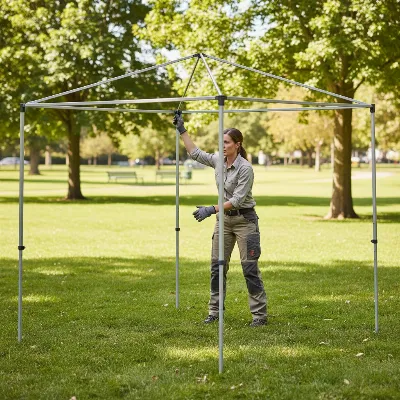 Woman setting up pop-up gazebo frame by herself, partially expanded in a park, bright daylight
Step 3: Attach the Canopy (the “Secret” for Solo Success)
This is a crucial tip for solo setup: attach the canopy before fully extending the frame. Drape the canopy fabric over the partially opened frame, ensuring each corner of the canopy aligns with the frame’s corners. Secure the canopy to the frame using any attached Velcro straps, clips, or ties. It’s much easier to reach the top and properly position the canopy when the frame is lower and not fully extended, preventing awkward stretching or misalignments.
Step 4: Fully Extend and Lock the Frame
Once the canopy is securely attached, stand inside the gazebo and continue pulling the frame outwards from the inside. Gently push up on the central hub or crossbar until the frame fully extends and locks into place with an audible click on all four sides. Many models feature push-button sliders or locking pins; ensure these mechanisms are engaged to provide maximum stability. Do not rush this step, and check that all corners are properly seated.
Step 5: Adjust the Legs to Your Desired Height
Pop-up gazebo legs typically have adjustable height settings. Locate the push-button or pull-pin mechanisms on each leg. Starting with one leg, press the release button and extend the leg to your desired height, ensuring it locks securely into place. Repeat this for the remaining three legs, adjusting them one by one to ensure even tension and height across the entire structure. For extra stability, especially if it’s breezy, consider using a lower height setting.
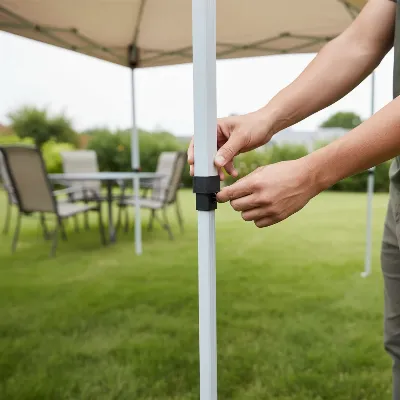 Person adjusting height of pop-up gazebo leg alone, securing it with a locking pin
Step 6: Secure Your Gazebo (Crucial for Safety)
Never skip this step, regardless of weather conditions, as an unsecured gazebo can become a dangerous projectile. For grass or soft ground, use the provided ground stakes, driving them through the footplates at the base of each leg at a 45-degree angle. On hard surfaces like concrete or pavement, attach sandbags or weighted bases to each leg. If your gazebo includes guy ropes, extend them outwards from the top corners and stake them down for additional stability.
Troubleshooting Common Solo Setup Challenges
Even with the best techniques, you might encounter a few snags during a solo pop-up gazebo setup. Knowing how to quickly address these common issues will save you time and frustration.
Frame Stuck or Difficult to Expand
If the frame feels stuck or isn’t expanding smoothly, avoid forcing it, as this can bend or damage the components. First, check for any fabric that might be caught in the hinges or joints. Sometimes, a gentle shake or slightly collapsing one side before attempting to expand again can free it up. Ensure no leg pins are partially engaged, preventing full extension.
Canopy Misaligned or Hard to Reach
Should the canopy seem misaligned or you find it difficult to attach the last few corners, partially collapse the frame slightly. This lowers the overall height, making it easier to adjust the fabric. Once the canopy is correctly positioned and secured, gradually expand the frame again, ensuring the canopy stretches evenly as it rises.
Instability After Setup
If your gazebo feels wobbly after setup, it’s often due to uneven leg extension or inadequate anchoring. Double-check that all four legs are locked at the same height setting. Then, ensure your stakes are driven deeply into the ground, or your weight bags are heavy enough and properly attached to each leg. Always use all available anchoring points to maximize stability.
Tips for an Even Faster Solo Setup
Getting your gazebo up quickly is a skill that improves with practice, but some specific strategies can shave off those precious minutes. Embrace these tips to become a true solo setup master.
- Practice Makes Perfect: The more often you set up your gazebo, the more familiar you’ll become with its quirks and mechanisms, making each subsequent setup faster.
- Pre-Attach Canopy (If Possible/Designed for It): Some gazebos allow the canopy to remain attached when folded down. If yours does, this saves significant time during setup. Check your specific model’s instructions.
- Use Leverage (e.g., Pegging One Leg): As mentioned, temporarily pegging down one leg provides a stable anchor, allowing you to pull against it to expand the frame with greater ease when working alone.
- Choose the Right Size for Solo Operation: If you frequently set up alone, opt for a smaller or medium-sized gazebo (e.g., 10×10 feet) that is more manageable. Larger models are inherently more challenging for one person.
Top Pop-Up Gazebo Brands for Easy Setup
Selecting a pop-up gazebo from a reputable brand can significantly influence the ease and speed of your solo setup. Certain manufacturers are known for designs that prioritize user-friendly features.
Brand A: MasterCanopy
MasterCanopy is often cited for its user-friendly designs and robust build quality, with many models featuring intuitive locking mechanisms and durable frames that make solo setup a breeze. Their gazebos are praised for their swift assembly times, sometimes under three minutes even for one person.
Brand B: Eurmax
Eurmax gazebos are well-regarded for their heavy-duty construction and commercial-grade frames, often incorporating quick-release pins and easy-to-slide components. While robust, their engineering still allows for efficient setup, making them a favorite for those needing reliability without sacrificing too much setup speed.
Brand C: ABCCANOPY
ABCCANOPY offers a wide range of pop-up gazebos known for their balance of affordability, ease of use, and a decent level of durability. Many models come with pre-attached canopies or simplified attachment systems, which are key features for a fast, solo setup.
Maintaining Your Pop-Up Gazebo
Proper maintenance is key to extending the life of your pop-up gazebo and ensuring it’s always ready for a quick setup. A little care goes a long way in preserving its functionality and appearance.
Regular Cleaning
After each use, especially if it’s been exposed to rain or damp conditions, ensure your gazebo canopy is completely dry before packing it away to prevent mildew and odors. Clean any dirt or stains with a mild soap and water solution, avoiding harsh chemicals that could damage the fabric. Regular cleaning prevents grime buildup and keeps your canopy looking fresh.
Proper Storage
Always store your pop-up gazebo in its original carrying bag, ideally in a cool, dry place away from direct sunlight and extreme temperatures. This protects the fabric from UV degradation and keeps the frame free from rust or corrosion. Storing it correctly also prevents the frame from twisting or bending, ensuring smooth operation for future setups.
Inspect for Wear and Tear
Before and after each use, take a moment to inspect the frame, canopy, and all locking mechanisms for any signs of wear, damage, or missing parts. Check for bent poles, frayed fabric, or loose fasteners. Addressing small issues promptly can prevent them from escalating into major problems that could hinder future setups or compromise the gazebo’s stability.
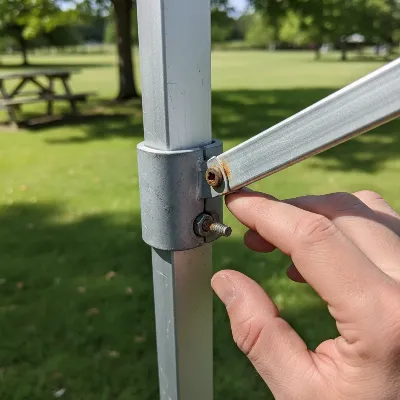 Hand inspecting a pop-up gazebo frame for wear and tear, close-up, outdoors
Conclusion
Mastering the solo setup of a pop-up gazebo tent is an invaluable skill, transforming what might seem like a two-person task into a swift, independent accomplishment. By prioritizing preparation, understanding the strategic steps—especially attaching the canopy while the frame is partially expanded—and securing your structure properly, you can confidently set up your gazebo in just minutes. Remember, practice refines technique, and a well-maintained gazebo is always ready for action. Embrace these tips, and enjoy your perfectly pitched, solo-assembled pop-up gazebo with pride. What adventures will you create under your quickly assembled shade next?
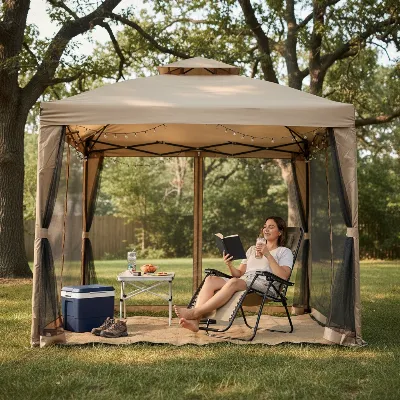 Happy person relaxing under a fully set up pop-up gazebo, serene outdoor setting
Frequently Asked Questions
Can a large pop-up gazebo (e.g., 10×20 ft) really be set up by one person in 5 minutes?
While smaller pop-up gazebos (like 10×10 ft) can often be set up solo in under 5 minutes with practice, larger models (e.g., 10×20 ft) are significantly more challenging due to their weight and expanded dimensions. While a determined individual might manage, it will likely take longer than 5 minutes and requires considerable effort and a very specific technique, often involving partial anchoring.
What are the most common mistakes people make when trying to set up a pop-up gazebo by themselves?
Common solo setup mistakes include not properly preparing the site, attempting to expand the frame fully before attaching the canopy (making it harder to reach), forcing a stuck frame, or neglecting to fully secure the gazebo with stakes or weights. Overlooking these steps can lead to frustration, damage, or an unstable structure.
How do I prevent my pop-up gazebo from blowing away when I’m setting it up alone?
To prevent your pop-up gazebo from blowing away during solo setup, especially on a windy day, it’s crucial to immediately secure it. A key tip is to peg down one leg firmly into the ground (if on grass) as soon as you partially expand the frame. Once the frame is fully extended and the canopy is on, attach all remaining stakes or sandbags to each leg before stepping away.
Is it necessary to attach the canopy before fully extending the frame?
Yes, it is highly recommended to attach the canopy while the pop-up gazebo frame is only partially extended. This lowers the height, making it much easier for one person to reach and properly align the canopy corners and secure all fastenings. Attempting to attach it when the frame is fully extended can be an awkward and difficult struggle for a solo assembler.
What tools or accessories are essential for an easy solo pop-up gazebo setup?
Essential tools and accessories for an easy solo pop-up gazebo setup include the gazebo’s carrying bag (often with wheels), ground stakes (for grass), sandbags or leg weights (for hard surfaces), and potentially a mallet for driving stakes. Having all these items readily available before starting is crucial for a smooth and quick assembly.
