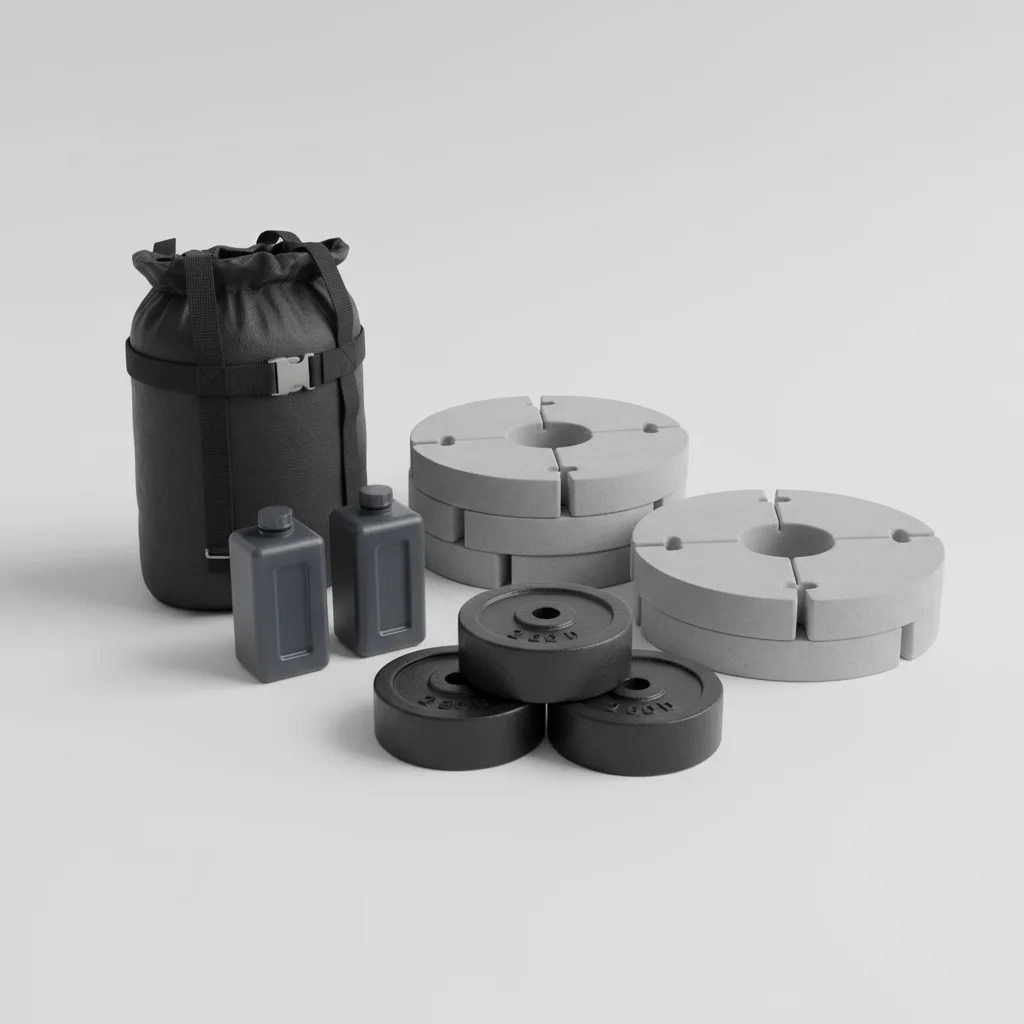
Understanding the right amount of gazebo tent weights is crucial for safety and stability, especially in unpredictable weather. For most standard 10×10 pop-up gazebos, you’ll need a minimum of 20-25 pounds per leg, totaling 80-100 pounds for the entire structure. This provides a foundational level of security against light to moderate breezes. However, factors like tent size, wind conditions, and ground surface can significantly alter these requirements, often necessitating much heavier solutions.
Why Gazebo Tent Weights Are Non-Negotiable
Many gazebo owners underestimate the force of wind. A sudden gust can easily lift an unsecured tent, turning it into a dangerous projectile that can cause property damage or serious injury. Weights provide the necessary ballast to counteract these forces, keeping your shelter firmly grounded. Relying solely on stakes, especially on hard surfaces or in soft ground, is often insufficient. Proper weighting ensures your investment is protected and your guests remain safe. For see our gazebo tents recommendations on this site.
Calculating Weight Needs Based on Gazebo Size and Wind
The larger your gazebo, the more surface area it presents to the wind, and thus, the more weight it requires. A 10×20 foot gazebo, for instance, will need substantially more weight than a 10×10. Furthermore, anticipated wind speeds are a critical factor. For winds up to 10-15 mph, the 20-25 lbs per leg rule is a good starting point. For winds between 15-25 mph, consider increasing to 30-40 lbs per leg. If you expect winds exceeding 25 mph, you should either not set up your gazebo or use extreme caution with weights upwards of 50 lbs per leg, combined with robust anchoring. Always err on the side of caution when it comes to wind.
Types of Gazebo Tent Weights and Their Effectiveness
|
Our Picks for the Best Gazebo Tent in 2026
As an Amazon Associate I earn from qualifying purchases.
|
||
| Num | Product | Action |
|---|---|---|
| 1 | 12'x12' Camping Screen Tent - Portable Screen Canopy 8-10 Person&Instant UV Resistant Sun Shelter,Easy to Set Up&Mosquito Net Tent&Waterproof,Suitable for Family Camping Trip,Backyard,Picnic |

|
| 2 | LEEDOR Pop Up Screen House, 6-10-15 Person Outdoor Screen Tent,Camping Screen Room with Carry Bag, Screened Gazebo with Mosquito Netting, Instant UV Resistant Sun Shelter for Garden, Patio, Backyard |
|
| 3 | Screen House Tent 12x12ft Screen Room Mesh Gazebos w/ 2 Zipper Doors, Camping Tent Screened Canopy Shelter for Outdoor Patios Backyards Activities |
|
| 4 | Alvantor® Screen House Gazebo, Pop Up Igloo Screened Canopy Tent with Mosquito Netting Sides, Instant UV Resistant Sun Shelter for Garden, Patio, Backyard 2-6-10-15 Person |
|
| 5 | VEVOR 6 x 6 ft Pop up Screen House Tent, 4-6 Person Portable Screen Gazebo, with Carry Bag, Netting Sides & Ground Stakes, Quick Setup, Screened Canopy for Garden, Patio & Backyard, and Outdoor, Beige |
|
| 6 | Alvantor® Screen House Gazebo, Pop Up Igloo Screened Canopy Tent with Mosquito Netting Sides, Instant UV Resistant Sun Shelter for Garden, Patio, Backyard 2-6-10-15 Person |
|
| 7 | Gazelle Tents™, G6 6-Sided Portable Gazebo, Easy Pop-Up Hub Screen Tent, Durable, TriTech Mesh, Waterproof, UV Resistant, 8-Person & Table, Desert Sand, 86" x 124" x 124", GG602DS |
|
| 8 | East Oak Screen House Tent Pop-Up, Portable Screen Room Canopy Instant Screen Tent 10 x 10 FT with Carry Bag for Patio, Backyard, Deck & Outdoor Activities, Beige |
|
| 9 | East Oak 12×12 FT Pop Up Canopy Tent with Mesh | Outdoor Screen House with 6 Sunshades | Instant Canopy with Portable Carry Bag | Gazebo Tent for Camping, Patio, and Beach | Beige |
|
| 10 | Alvantor® Screen House Gazebo, Pop Up Igloo Screened Canopy Tent with Mosquito Netting Sides, Instant UV Resistant Sun Shelter for Garden, Patio, Backyard 2-6-10-15 Person |
|
There are several popular options for weighting down your gazebo, each with its own advantages and disadvantages. Sandbags are a common and affordable choice, offering flexibility in weight distribution. Water weights, often in the form of fillable plastic bases, are convenient for transport when empty but can be bulky when filled. Cast iron or concrete weights provide significant, compact mass but are heavier to transport. Finally, some specialized clamp-on weights attach directly to the frame, offering a secure hold.When choosing, consider ease of use, portability, and the level of security required for your specific event or home use.
Best Practices for Securing Your Gazebo Tent
- Always use weights on all four legs, distributing the load evenly.
- Combine weights with stakes or guy ropes whenever possible, especially on grass or soft ground.
- Regularly check the stability of your gazebo and its weights, particularly during prolonged use or changing weather.
- Never leave a gazebo unattended in high winds, even if weighted.
- Consider additional bracing or tie-downs for larger or more permanent structures.
When to Consider Professional Anchoring Solutions
For semi-permanent or commercial gazebo installations, or in areas prone to very high winds, standard weights may not suffice. Professional anchoring solutions, such as concrete footings, ground screws, or heavy-duty lag bolts into a deck, offer superior stability. These methods are often more involved and may require professional installation, but they provide peace of mind for long-term setups.Always consult local regulations and manufacturer guidelines before implementing any permanent anchoring solution.
