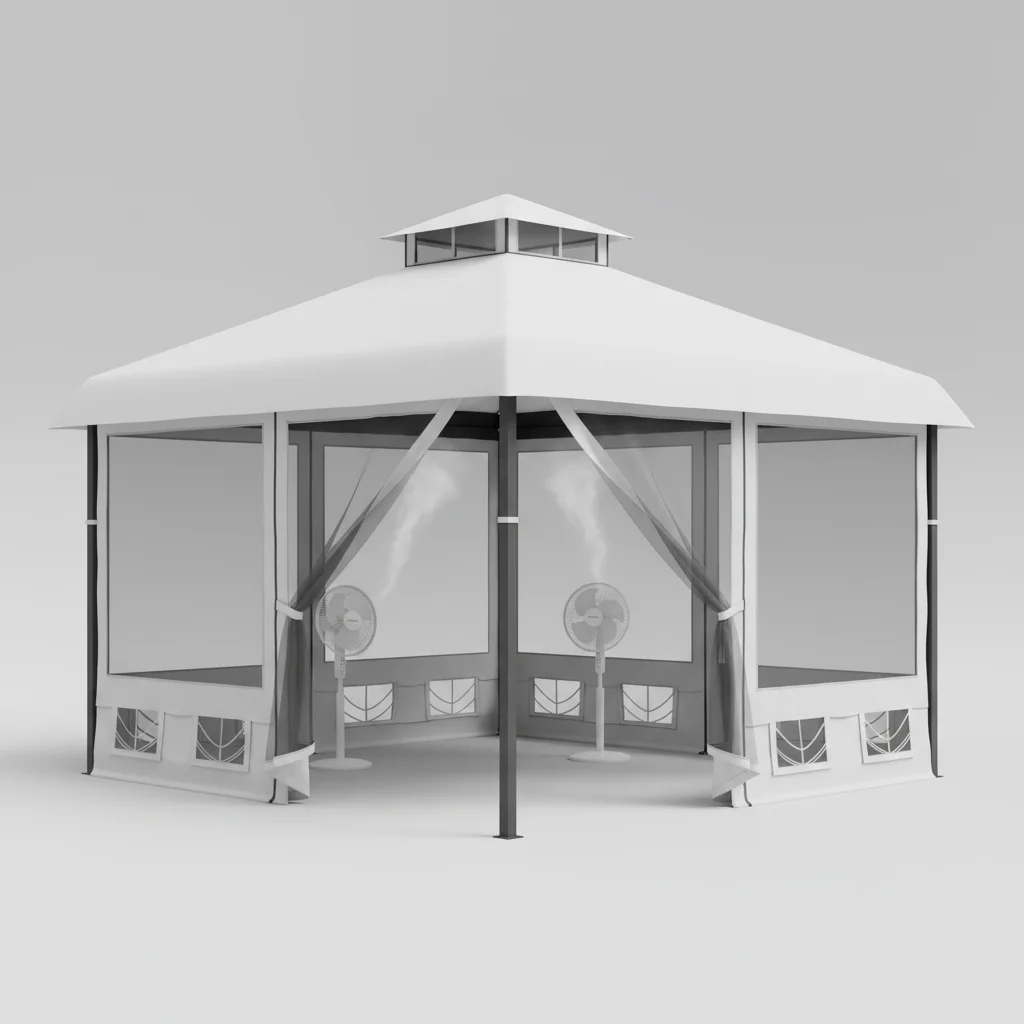
Effective gazebo tent ventilation is crucial for maintaining comfort, especially during warmer months. Proper airflow prevents stuffiness, reduces heat buildup, and minimizes condensation, making your outdoor space more enjoyable. This guide will explore five key strategies to optimize ventilation in your gazebo tent, ensuring a cool and pleasant environment for all your gatherings.
Understanding Airflow Dynamics in Gazebo Tents
The principle behind good ventilation is simple: allow hot, stale air to escape while drawing in cooler, fresh air. In a gazebo tent, this often means utilizing natural convection. Hot air rises, so vents or openings near the top of the canopy are highly effective for expelling heat. Simultaneously, openings lower down allow cooler air to enter, creating a continuous cycle of air exchange. Understanding this dynamic helps in strategically positioning your tent and utilizing its features.
Utilizing Built-In Vents and Mesh Windows
Many modern gazebo tents come equipped with built-in ventilation features designed to maximize airflow. Look for models with a double-tiered roof, often called a ‘vented canopy’ or ‘cupola vent,’ which allows hot air to escape through the top without compromising weather protection. Mesh windows are another essential feature, providing cross-ventilation while keeping insects out. Ensure these windows can be fully opened and secured to allow for maximum air circulation. Regularly checking that these vents are clear of obstructions, such as leaves or debris, will ensure they function optimally.
Strategic Placement for Natural Breezes
The location of your gazebo tent significantly impacts its ventilation. Before setting up, observe the prevailing wind direction in your chosen area. Position your tent so that its largest openings or mesh windows face into the breeze, allowing natural air currents to flow through. Avoid placing the tent in sheltered spots that block airflow, such as directly against a solid wall or dense shrubbery. Even a slight adjustment in orientation can make a substantial difference in internal temperature and comfort. Consider the sun’s path throughout the day to minimize direct sun exposure, which can also contribute to heat buildup.
Adding External Fans and Air Circulators
|
Our Picks for the Best Gazebo Tent in 2026
As an Amazon Associate I earn from qualifying purchases.
|
||
| Num | Product | Action |
|---|---|---|
| 1 | East Oak Screen House Tent Pop-Up, Portable Screen Room Canopy Instant Screen Tent 10 x 10 FT with Carry Bag for Patio, Backyard, Deck & Outdoor Activities, Beige |

|
| 2 | Screen House Tent 12x12ft Screen Room Mesh Gazebos w/ 2 Zipper Doors, Camping Tent Screened Canopy Shelter for Outdoor Patios Backyards Activities |
|
| 3 | Alvantor® Screen House Gazebo, Pop Up Igloo Screened Canopy Tent with Mosquito Netting Sides, Instant UV Resistant Sun Shelter for Garden, Patio, Backyard 2-6-10-15 Person |
|
| 4 | Alvantor® Screen House Gazebo, Pop Up Igloo Screened Canopy Tent with Mosquito Netting Sides, Instant UV Resistant Sun Shelter for Garden, Patio, Backyard 2-6-10-15 Person |
|
| 5 | VEVOR 6 x 6 ft Pop up Screen House Tent, 4-6 Person Portable Screen Gazebo, with Carry Bag, Netting Sides & Ground Stakes, Quick Setup, Screened Canopy for Garden, Patio & Backyard, and Outdoor, Beige |
|
| 6 | Alvantor® Screen House Gazebo, Pop Up Igloo Screened Canopy Tent with Mosquito Netting Sides, Instant UV Resistant Sun Shelter for Garden, Patio, Backyard 2-6-10-15 Person |
|
| 7 | LEEDOR Pop Up Screen House, 6-10-15 Person Outdoor Screen Tent,Camping Screen Room with Carry Bag, Screened Gazebo with Mosquito Netting, Instant UV Resistant Sun Shelter for Garden, Patio, Backyard |
|
| 8 | Gazelle Tents™, G6 6-Sided Portable Gazebo, Easy Pop-Up Hub Screen Tent, Durable, TriTech Mesh, Waterproof, UV Resistant, 8-Person & Table, Desert Sand, 86" x 124" x 124", GG602DS |
|
| 9 | 12'x12' Camping Screen Tent - Portable Screen Canopy 8-10 Person&Instant UV Resistant Sun Shelter,Easy to Set Up&Mosquito Net Tent&Waterproof,Suitable for Family Camping Trip,Backyard,Picnic |
|
| 10 | East Oak 12×12 FT Pop Up Canopy Tent with Mesh | Outdoor Screen House with 6 Sunshades | Instant Canopy with Portable Carry Bag | Gazebo Tent for Camping, Patio, and Beach | Beige |
|
For situations where natural airflow is insufficient, incorporating external fans or air circulators can dramatically improve ventilation. Battery-operated or solar-powered fans are excellent portable options for areas without electrical outlets. For more permanent setups, consider an outdoor-rated oscillating fan positioned to direct air through the tent. Ceiling fans designed for outdoor use can also be installed in larger, more robust gazebo structures, providing a consistent downward flow of air that helps dissipate heat.These devices actively move air, preventing stagnant pockets and creating a more comfortable atmosphere.
Enhancing Airflow with Side Panels and Curtains
While side panels and curtains offer privacy and protection from the elements, they can also impede ventilation if not managed correctly. When ventilation is a priority, ensure that side panels are either completely removed, rolled up, or tied back to allow for maximum air passage. If your gazebo has zippered mesh walls, keep them closed to deter insects but open any solid fabric panels. Some gazebo tents feature adjustable louvered panels or removable sections that can be configured to optimize airflow while still offering some shade.Always prioritize opening up as many sides as possible when the weather permits and ventilation is key.
- Open all available mesh windows and vents fully.
- Position the gazebo to catch prevailing breezes.
- Utilize a double-tiered roof design for heat escape.
- Consider adding portable or mounted outdoor fans.
- Roll up or remove solid side panels when not needed.
Maintaining Your Gazebo for Optimal Airflow
Regular maintenance is key to ensuring your gazebo tent remains well-ventilated. Keep the canopy clean, as dirt and debris can block mesh screens and vents. Inspect zippers and ties on windows and side panels to ensure they are functioning correctly, allowing for easy opening and closing. Proper storage during off-seasons also helps prevent damage to ventilation features. By consistently applying these strategies, you can ensure your gazebo tent provides a cool, comfortable retreat even on the warmest days.
