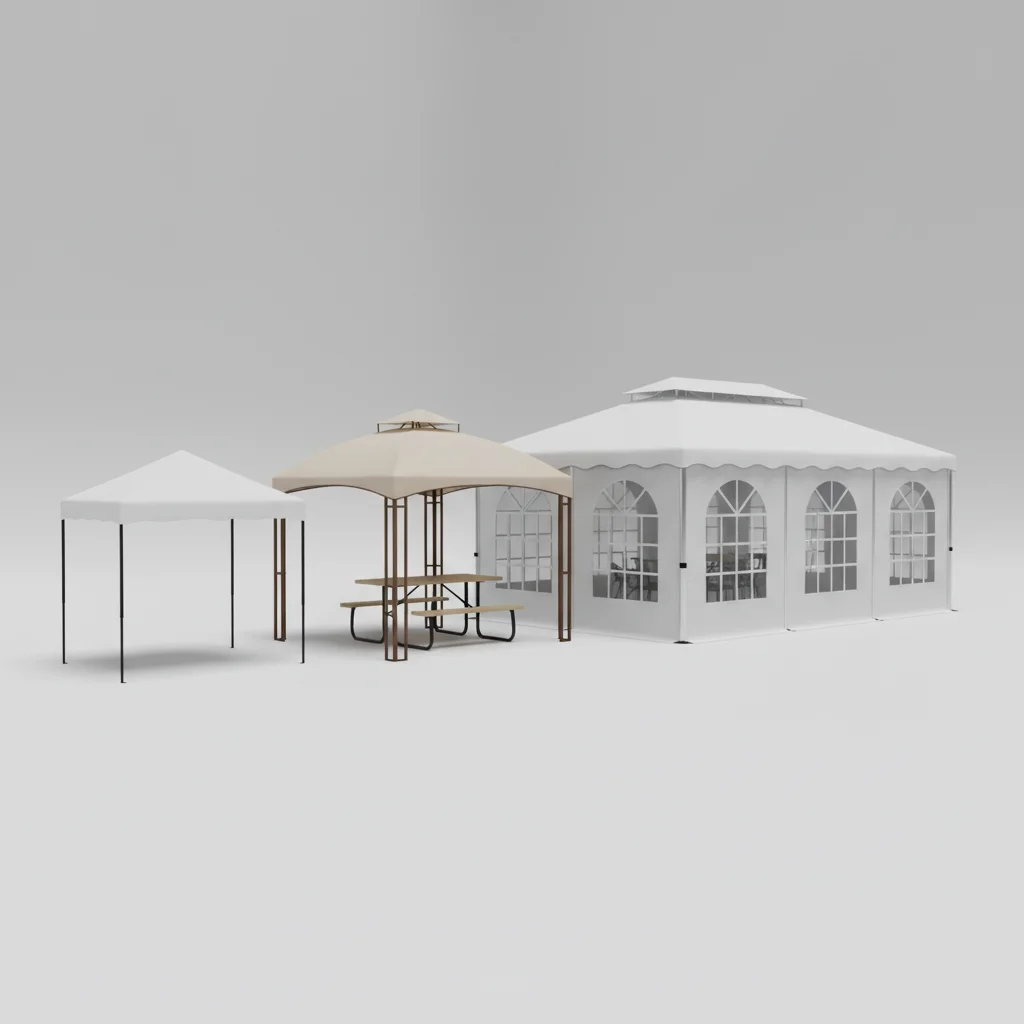
Choosing the correct gazebo tent size is crucial for both functionality and aesthetics. The ideal size depends on your intended use, the number of people you expect to accommodate, and the available space. For most residential uses, a 10×10 foot gazebo tent offers a versatile balance of coverage and footprint, comfortably fitting a small dining set or several lounge chairs.
Understanding Common Gazebo Tent Dimensions
Gazebo tents come in a variety of standard dimensions, with 10×10, 10×12, and 12×12 feet being the most popular for personal use. Larger sizes, such as 10×20 or 20×20 feet, are typically reserved for commercial events or very spacious backyards. When measuring your space, always account for an additional foot or two around the perimeter for stakes, guy lines, and comfortable movement.
Matching Size to Your Event Needs
Consider the primary purpose of your gazebo. For a small family gathering or a quiet reading nook, a 10×10 tent is often sufficient. If you plan to host larger dinner parties or need space for a buffet table and seating, a 10×12 or 12×12 model provides more elbow room. For weddings or large community events, multiple larger tents or a single extra-large gazebo will be necessary to ensure all guests are comfortably sheltered.
- Small Gatherings (1-4 people): 8×8 or 10×10 feet
- Medium Events (5-8 people): 10×12 or 12×12 feet
- Large Parties (9-15 people): 10×20 or 12×24 feet
- Commercial Use/Weddings (15+ people): 20×20 feet or larger custom sizes
Always visualize your furniture layout within the chosen dimensions to avoid overcrowding. Remember that the listed size usually refers to the canopy footprint, not the base footprint, which can be slightly larger.
Factors Beyond Square Footage
|
Our Picks for the Best Gazebo Tent in 2026
As an Amazon Associate I earn from qualifying purchases.
|
||
| Num | Product | Action |
|---|---|---|
| 1 | Alvantor® Screen House Gazebo, Pop Up Igloo Screened Canopy Tent with Mosquito Netting Sides, Instant UV Resistant Sun Shelter for Garden, Patio, Backyard 2-6-10-15 Person |

|
| 2 | VEVOR 6 x 6 ft Pop up Screen House Tent, 4-6 Person Portable Screen Gazebo, with Carry Bag, Netting Sides & Ground Stakes, Quick Setup, Screened Canopy for Garden, Patio & Backyard, and Outdoor, Beige |
|
| 3 | Alvantor® Screen House Gazebo, Pop Up Igloo Screened Canopy Tent with Mosquito Netting Sides, Instant UV Resistant Sun Shelter for Garden, Patio, Backyard 2-6-10-15 Person |
|
| 4 | LEEDOR Pop Up Screen House, 6-10-15 Person Outdoor Screen Tent,Camping Screen Room with Carry Bag, Screened Gazebo with Mosquito Netting, Instant UV Resistant Sun Shelter for Garden, Patio, Backyard |
|
| 5 | Gazelle Tents™, G6 6-Sided Portable Gazebo, Easy Pop-Up Hub Screen Tent, Durable, TriTech Mesh, Waterproof, UV Resistant, 8-Person & Table, Desert Sand, 86" x 124" x 124", GG602DS |
|
| 6 | Alvantor® Screen House Gazebo, Pop Up Igloo Screened Canopy Tent with Mosquito Netting Sides, Instant UV Resistant Sun Shelter for Garden, Patio, Backyard 2-6-10-15 Person |
|
| 7 | East Oak 12×12 FT Pop Up Canopy Tent with Mesh | Outdoor Screen House with 6 Sunshades | Instant Canopy with Portable Carry Bag | Gazebo Tent for Camping, Patio, and Beach | Beige |
|
| 8 | 12'x12' Camping Screen Tent - Portable Screen Canopy 8-10 Person&Instant UV Resistant Sun Shelter,Easy to Set Up&Mosquito Net Tent&Waterproof,Suitable for Family Camping Trip,Backyard,Picnic |
|
| 9 | Screen House Tent 12x12ft Screen Room Mesh Gazebos w/ 2 Zipper Doors, Camping Tent Screened Canopy Shelter for Outdoor Patios Backyards Activities |
|
| 10 | East Oak Screen House Tent Pop-Up, Portable Screen Room Canopy Instant Screen Tent 10 x 10 FT with Carry Bag for Patio, Backyard, Deck & Outdoor Activities, Beige |
|
Beyond the base dimensions, consider the peak height and eave height. A higher peak offers better headroom and can make the space feel more open, while a sufficient eave height is important for comfortable entry and exit, especially for taller individuals. Ventilation is also indirectly related to size; larger tents often have more windows or vents, which can be crucial in warmer climates.
Choosing for Permanent vs. Portable Use
For a permanent or semi-permanent installation, you might opt for a larger, more robust gazebo tent that can withstand various weather conditions. These often have heavier frames and more durable canopies. For portable use, such as camping or beach trips, a smaller, lighter pop-up gazebo is more practical. These are designed for quick setup and takedown, and their compact packed size is a significant advantage.
Measuring Your Available Space Accurately
Before making a purchase, meticulously measure the area where you intend to place your gazebo tent. Account for any obstructions like trees, fences, or building overhangs. If placing it on a deck or patio, ensure the gazebo’s footprint fits entirely within the hard surface. For uneven ground, a slightly smaller gazebo might be easier to level and secure.
