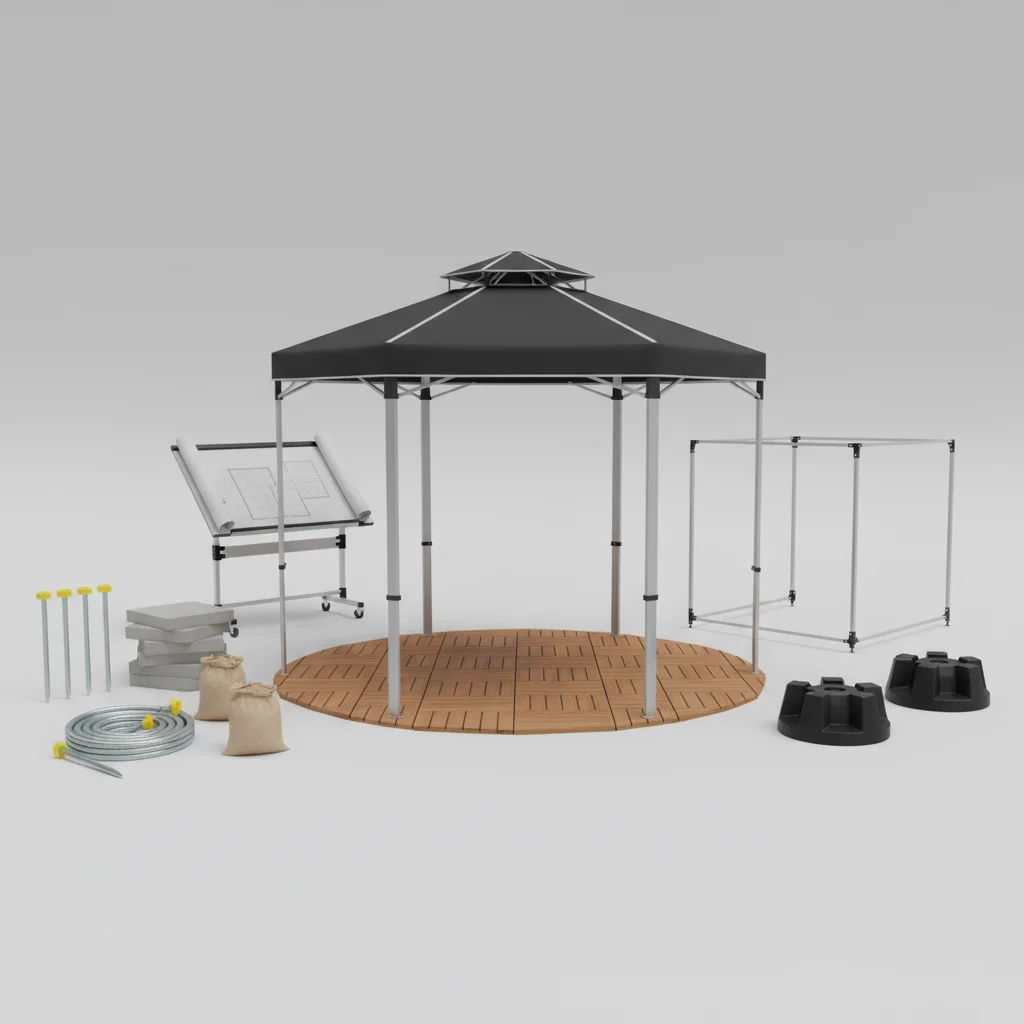
When setting up a gazebo tent, understanding the necessity of a permanent foundation is crucial for stability and longevity. For most temporary or portable gazebo tents, a permanent foundation is not required, as their design prioritizes ease of setup and relocation. However, for larger, more semi-permanent structures intended for long-term placement, a robust foundation can significantly enhance safety and extend the lifespan of your gazebo.
Understanding Temporary vs. Permanent Gazebo Tent Needs
Temporary gazebo tents, often used for events, picnics, or short-term backyard shade, are designed to be lightweight and easily movable. These typically rely on stakes, sandbags, or water weights for stability, making a permanent foundation unnecessary. Their primary advantage is flexibility, allowing users to adapt to different locations and weather conditions without significant structural commitment.
Conversely, if you envision your gazebo tent as a more integrated part of your outdoor living space, perhaps for an extended season or even year-round, then considering a more substantial base becomes important. This distinction guides whether you should invest in a foundational solution or stick with simpler anchoring methods.
Types of Foundations for Gazebo Tents
There are several types of foundations that can be considered, depending on the gazebo tent’s size, intended use, and local regulations. The most common include concrete slabs, paver bases, and treated wood decks. Concrete slabs offer the highest level of permanence and stability, ideal for heavy-duty or commercial-grade gazebo tents. Paver bases provide a slightly less permanent but still very stable option, often preferred for aesthetic reasons and easier DIY installation. Treated wood decks can also serve as an excellent foundation, especially if you desire a raised platform or a seamless integration with existing decking.
Each option presents different levels of cost, labor, and permanence. It’s important to assess your specific needs and budget before committing to a particular foundation type.
When a Permanent Foundation is Recommended
|
Our Picks for the Best Gazebo Tent in 2026
As an Amazon Associate I earn from qualifying purchases.
|
||
| Num | Product | Action |
|---|---|---|
| 1 | 12'x12' Camping Screen Tent - Portable Screen Canopy 8-10 Person&Instant UV Resistant Sun Shelter,Easy to Set Up&Mosquito Net Tent&Waterproof,Suitable for Family Camping Trip,Backyard,Picnic |

|
| 2 | VEVOR 6 x 6 ft Pop up Screen House Tent, 4-6 Person Portable Screen Gazebo, with Carry Bag, Netting Sides & Ground Stakes, Quick Setup, Screened Canopy for Garden, Patio & Backyard, and Outdoor, Beige |
|
| 3 | East Oak 12×12 FT Pop Up Canopy Tent with Mesh | Outdoor Screen House with 6 Sunshades | Instant Canopy with Portable Carry Bag | Gazebo Tent for Camping, Patio, and Beach | Beige |
|
| 4 | Alvantor® Screen House Gazebo, Pop Up Igloo Screened Canopy Tent with Mosquito Netting Sides, Instant UV Resistant Sun Shelter for Garden, Patio, Backyard 2-6-10-15 Person |
|
| 5 | East Oak Screen House Tent Pop-Up, Portable Screen Room Canopy Instant Screen Tent 10 x 10 FT with Carry Bag for Patio, Backyard, Deck & Outdoor Activities, Beige |
|
| 6 | Gazelle Tents™, G6 6-Sided Portable Gazebo, Easy Pop-Up Hub Screen Tent, Durable, TriTech Mesh, Waterproof, UV Resistant, 8-Person & Table, Desert Sand, 86" x 124" x 124", GG602DS |
|
| 7 | Alvantor® Screen House Gazebo, Pop Up Igloo Screened Canopy Tent with Mosquito Netting Sides, Instant UV Resistant Sun Shelter for Garden, Patio, Backyard 2-6-10-15 Person |
|
| 8 | Alvantor® Screen House Gazebo, Pop Up Igloo Screened Canopy Tent with Mosquito Netting Sides, Instant UV Resistant Sun Shelter for Garden, Patio, Backyard 2-6-10-15 Person |
|
| 9 | Screen House Tent 12x12ft Screen Room Mesh Gazebos w/ 2 Zipper Doors, Camping Tent Screened Canopy Shelter for Outdoor Patios Backyards Activities |
|
| 10 | LEEDOR Pop Up Screen House, 6-10-15 Person Outdoor Screen Tent,Camping Screen Room with Carry Bag, Screened Gazebo with Mosquito Netting, Instant UV Resistant Sun Shelter for Garden, Patio, Backyard |
|
A permanent foundation is highly recommended for gazebo tents that are:
- Large in size (e.g., exceeding 10×10 feet)
- Intended for long-term or year-round placement
- Located in areas prone to high winds or extreme weather
- Used for commercial purposes, such as farmers markets or outdoor cafes
- Designed with heavier frames or hardtop roofs
In these scenarios, the added stability and security provided by a permanent base far outweigh the initial investment and effort. It ensures the safety of occupants and protects your investment from potential damage due to environmental factors.
Installation Considerations and Local Regulations
Before installing any permanent foundation, it’s crucial to check local building codes and homeowner association (HOA) regulations. Some areas may require permits for permanent structures, even for gazebo tents, especially if they exceed certain dimensions or are attached to the ground. Failing to comply with these regulations can lead to fines or the forced removal of your structure.
Additionally, proper site preparation is key. Ensure the ground is level and well-drained to prevent water accumulation and potential damage to the foundation and gazebo tent. Professional installation might be advisable for complex foundations like concrete slabs to ensure structural integrity and compliance with all safety standards.
Maintaining Your Gazebo Tent and Foundation
Regardless of whether you choose a temporary or permanent foundation, regular maintenance is essential for extending the life of your gazebo tent. For permanent foundations, inspect for cracks, shifting, or erosion periodically. For temporary setups, regularly check the integrity of stakes, ropes, and weights, especially after strong winds or heavy rain. Keeping the canopy clean and free of debris will also prevent premature wear and tear.
