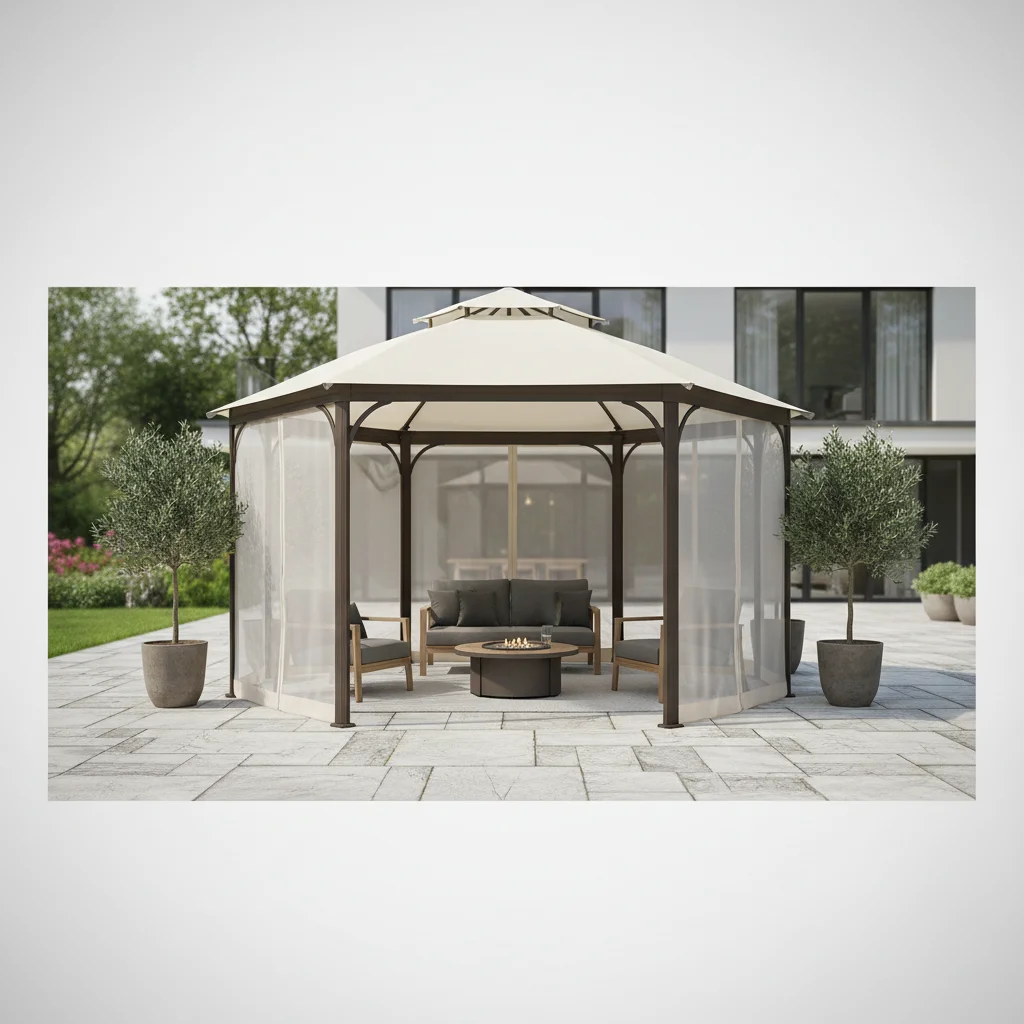
Choosing the right gazebo tent for your patio involves careful consideration of size, material, and intended use. For most standard patios, a 10×10 foot gazebo tent offers an ideal balance of shade and space without overwhelming the area. This size provides ample room for a dining set or a comfortable lounge arrangement, making it perfect for everyday relaxation or small gatherings.
Measuring Your Patio for the Perfect Fit
Before selecting a gazebo tent, accurately measure your patio’s dimensions. Consider not only the length and width but also any obstructions like walls, railings, or existing furniture that will remain in place. Leave at least 1-2 feet of clearance around the gazebo for comfortable movement and to prevent it from feeling cramped. A common mistake is to only measure the usable space, forgetting that the gazebo’s footprint might extend slightly beyond its canopy due to legs or anchoring points.
Understanding Gazebo Tent Dimensions
Gazebo tents come in a variety of standard sizes, with 8×8, 10×10, and 12×12 feet being the most popular for residential use. An 8×8 tent is suitable for very small patios or balconies, offering shade for a couple of chairs. The 10×10 size, as mentioned, is versatile for most average-sized patios. For larger patios or those hosting frequent events, a 12×12 or even a 10×20 rectangular gazebo might be more appropriate. Always check the manufacturer’s exact specifications, as some models may have slightly different dimensions than their advertised size.
Material Considerations for Patio Gazebos
|
Our Picks for the Best Gazebo Tent in 2026
As an Amazon Associate I earn from qualifying purchases.
|
||
| Num | Product | Action |
|---|---|---|
| 1 | Alvantor® Screen House Gazebo, Pop Up Igloo Screened Canopy Tent with Mosquito Netting Sides, Instant UV Resistant Sun Shelter for Garden, Patio, Backyard 2-6-10-15 Person |

|
| 2 | Gazelle Tents™, G6 6-Sided Portable Gazebo, Easy Pop-Up Hub Screen Tent, Durable, TriTech Mesh, Waterproof, UV Resistant, 8-Person & Table, Desert Sand, 86" x 124" x 124", GG602DS |
|
| 3 | VEVOR 6 x 6 ft Pop up Screen House Tent, 4-6 Person Portable Screen Gazebo, with Carry Bag, Netting Sides & Ground Stakes, Quick Setup, Screened Canopy for Garden, Patio & Backyard, and Outdoor, Beige |
|
| 4 | Screen House Tent 12x12ft Screen Room Mesh Gazebos w/ 2 Zipper Doors, Camping Tent Screened Canopy Shelter for Outdoor Patios Backyards Activities |
|
| 5 | Alvantor® Screen House Gazebo, Pop Up Igloo Screened Canopy Tent with Mosquito Netting Sides, Instant UV Resistant Sun Shelter for Garden, Patio, Backyard 2-6-10-15 Person |
|
| 6 | LEEDOR Pop Up Screen House, 6-10-15 Person Outdoor Screen Tent,Camping Screen Room with Carry Bag, Screened Gazebo with Mosquito Netting, Instant UV Resistant Sun Shelter for Garden, Patio, Backyard |
|
| 7 | 12'x12' Camping Screen Tent - Portable Screen Canopy 8-10 Person&Instant UV Resistant Sun Shelter,Easy to Set Up&Mosquito Net Tent&Waterproof,Suitable for Family Camping Trip,Backyard,Picnic |
|
| 8 | East Oak Screen House Tent Pop-Up, Portable Screen Room Canopy Instant Screen Tent 10 x 10 FT with Carry Bag for Patio, Backyard, Deck & Outdoor Activities, Beige |
|
| 9 | Alvantor® Screen House Gazebo, Pop Up Igloo Screened Canopy Tent with Mosquito Netting Sides, Instant UV Resistant Sun Shelter for Garden, Patio, Backyard 2-6-10-15 Person |
|
| 10 | East Oak 12×12 FT Pop Up Canopy Tent with Mesh | Outdoor Screen House with 6 Sunshades | Instant Canopy with Portable Carry Bag | Gazebo Tent for Camping, Patio, and Beach | Beige |
|
The material of your gazebo tent’s frame and canopy significantly impacts its durability and aesthetic. Steel frames are robust and offer good stability, while aluminum frames are lighter and more resistant to rust, making them ideal for areas with high humidity. Canopies are typically made from polyester or polyethylene, often treated for UV resistance and waterproofing. For a patio gazebo, look for a canopy with a high denier count (e.g., 210D or 300D) for better tear resistance and longevity. Consider the color as well; lighter colors reflect more sunlight, keeping the area cooler, while darker colors absorb heat but may offer more shade.
Anchoring Your Patio Gazebo Tent
Properly anchoring your gazebo tent on a patio is crucial for safety, especially in windy conditions. For concrete or paved patios, sandbags, water weights, or leg weights are effective solutions. Some gazebos come with pre-drilled holes in their feet, allowing them to be bolted directly into the patio surface for a more permanent installation. Always ensure the anchoring method is secure and appropriate for your specific patio material and local weather conditions. Never rely solely on the weight of the gazebo itself to keep it in place.
- Measure your patio accurately, including clearance.
- Choose a size (e.g., 10×10 ft) that balances shade and space.
- Select durable frame and canopy materials suitable for your climate.
- Ensure proper anchoring for stability and safety.
- Consider the aesthetic and how it complements your outdoor decor.
Features to Look for in a Patio Gazebo Tent
When selecting a gazebo tent for your patio, consider features that enhance comfort and usability. Vented canopies improve airflow and stability in windy conditions. Integrated mosquito netting can transform your patio into an insect-free zone, perfect for evening use. Some models offer side walls for added privacy or protection from sun and wind. Look for easy-to-assemble designs if you plan to take it down frequently, or a more robust, semi-permanent structure if it will remain up year-round.Many patio-specific gazebos also feature decorative elements that can elevate your outdoor living space.
