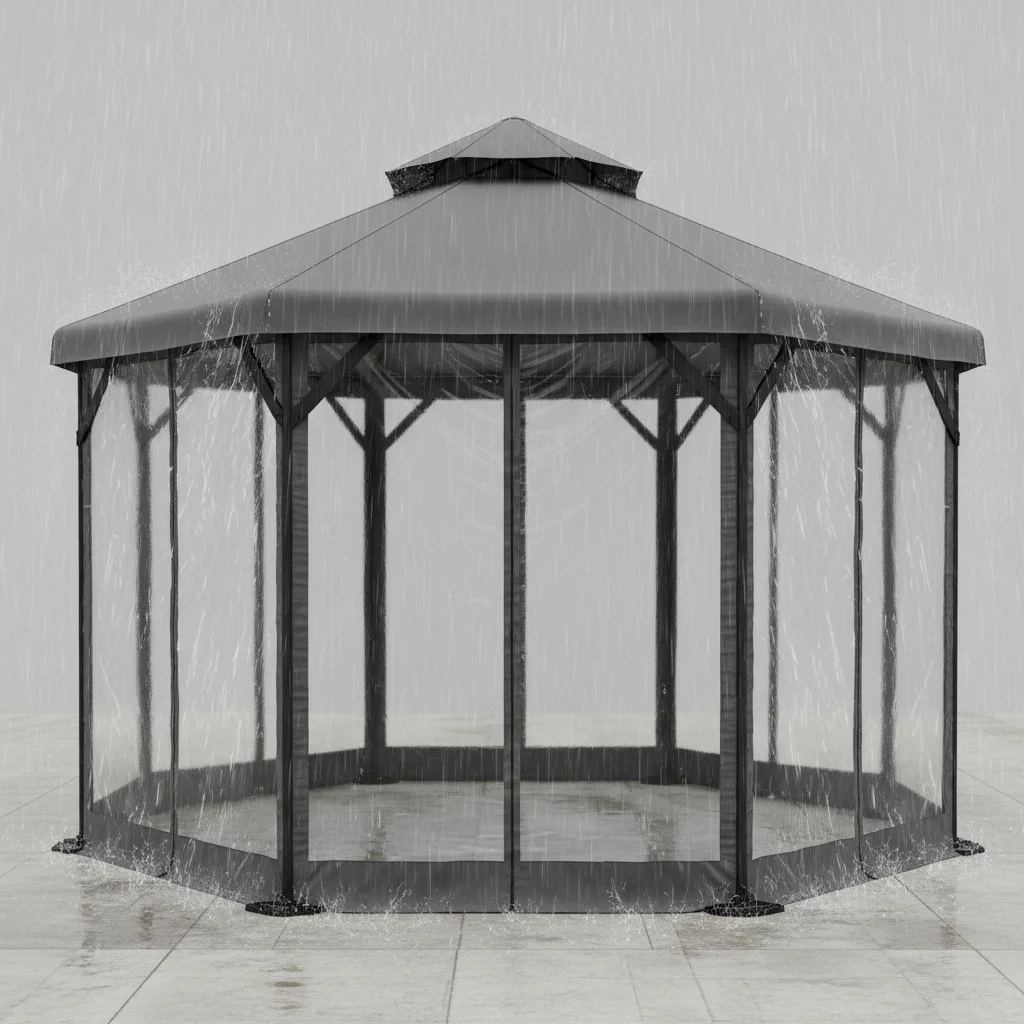
When selecting a gazebo tent for rainy weather, the most crucial factors to consider are waterproofing, structural stability, and proper drainage. A well-chosen tent will protect your event or gathering from unexpected downpours, ensuring comfort and dryness. This guide will walk you through the essential features to look for to make an informed decision.
Understanding Waterproofing Ratings for Gazebo Tents
Waterproofing in gazebo tents is typically measured in hydrostatic head (HH) ratings, indicating the amount of water pressure a fabric can withstand before leaking. For reliable protection in rainy conditions, look for a minimum HH rating of 1500mm. Tents with ratings of 2000mm or higher offer superior resistance to heavy rain and prolonged exposure. Beyond the fabric, pay attention to seam sealing; taped or heat-sealed seams are vital to prevent water ingress through stitching holes. A tent might have excellent fabric, but if the seams aren’t properly sealed, water will find its way in.
Structural Stability and Wind Resistance in Wet Conditions
Rainy weather often brings strong winds, making structural stability a critical consideration. Look for gazebo tents with robust frames, preferably made from steel or heavy-duty aluminum. Leg poles should be thick and securely connected to the canopy. Cross-bracing and reinforced corners significantly enhance a tent’s ability to withstand gusts. Guy ropes and stakes are essential for anchoring, especially on soft ground that can become saturated. Some advanced models feature unique frame designs that distribute wind load more effectively, reducing the risk of collapse during a storm.
Effective Drainage and Runoff Management
|
Our Picks for the Best Gazebo Tent in 2026
As an Amazon Associate I earn from qualifying purchases.
|
||
| Num | Product | Action |
|---|---|---|
| 1 | LEEDOR Pop Up Screen House, 6-10-15 Person Outdoor Screen Tent,Camping Screen Room with Carry Bag, Screened Gazebo with Mosquito Netting, Instant UV Resistant Sun Shelter for Garden, Patio, Backyard |

|
| 2 | East Oak Screen House Tent Pop-Up, Portable Screen Room Canopy Instant Screen Tent 10 x 10 FT with Carry Bag for Patio, Backyard, Deck & Outdoor Activities, Beige |
|
| 3 | Alvantor® Screen House Gazebo, Pop Up Igloo Screened Canopy Tent with Mosquito Netting Sides, Instant UV Resistant Sun Shelter for Garden, Patio, Backyard 2-6-10-15 Person |
|
| 4 | East Oak 12×12 FT Pop Up Canopy Tent with Mesh | Outdoor Screen House with 6 Sunshades | Instant Canopy with Portable Carry Bag | Gazebo Tent for Camping, Patio, and Beach | Beige |
|
| 5 | Screen House Tent 12x12ft Screen Room Mesh Gazebos w/ 2 Zipper Doors, Camping Tent Screened Canopy Shelter for Outdoor Patios Backyards Activities |
|
| 6 | Alvantor® Screen House Gazebo, Pop Up Igloo Screened Canopy Tent with Mosquito Netting Sides, Instant UV Resistant Sun Shelter for Garden, Patio, Backyard 2-6-10-15 Person |
|
| 7 | VEVOR 6 x 6 ft Pop up Screen House Tent, 4-6 Person Portable Screen Gazebo, with Carry Bag, Netting Sides & Ground Stakes, Quick Setup, Screened Canopy for Garden, Patio & Backyard, and Outdoor, Beige |
|
| 8 | Gazelle Tents™, G6 6-Sided Portable Gazebo, Easy Pop-Up Hub Screen Tent, Durable, TriTech Mesh, Waterproof, UV Resistant, 8-Person & Table, Desert Sand, 86" x 124" x 124", GG602DS |
|
| 9 | Alvantor® Screen House Gazebo, Pop Up Igloo Screened Canopy Tent with Mosquito Netting Sides, Instant UV Resistant Sun Shelter for Garden, Patio, Backyard 2-6-10-15 Person |
|
| 10 | 12'x12' Camping Screen Tent - Portable Screen Canopy 8-10 Person&Instant UV Resistant Sun Shelter,Easy to Set Up&Mosquito Net Tent&Waterproof,Suitable for Family Camping Trip,Backyard,Picnic |
|
Proper drainage is key to preventing water pooling on the canopy and around the base of your gazebo tent. Canopies should have a slight slope to allow water to run off naturally. Some tents incorporate integrated gutter systems or extended eaves to direct water away from the entry points and sides. Consider the ground where you’ll be setting up; if it’s prone to puddling, a tent with a raised base or an optional ground tarp can help keep the interior dry. Regularly check for any areas where water might collect on the canopy, as prolonged pooling can stretch the fabric and compromise its integrity.
Key Features for Rainy Weather Gazebo Tents
- High Hydrostatic Head Rating: Aim for 1500mm or more for reliable rain protection.
- Taped or Heat-Sealed Seams: Essential for preventing leaks through stitching.
- Robust Frame Materials: Steel or heavy-duty aluminum for stability.
- Secure Anchoring Points: Strong guy ropes and stakes are crucial.
- Sloped Canopy Design: Ensures efficient water runoff.
Material Choices for Durability and Longevity
The material of your gazebo tent’s canopy plays a significant role in its performance during rainy weather. Polyester with a PU (polyurethane) coating is a common and effective choice, offering good waterproofing and UV resistance. Ripstop nylon is another excellent option, known for its strength-to-weight ratio and resistance to tearing. For extreme conditions, some high-end tents use PVC-coated fabrics, which are exceptionally durable and waterproof but also heavier. Always check the denier (D) rating of the fabric; a higher denier indicates a thicker, more robust material that will stand up better to the elements over time.
Ventilation and Condensation Management
While keeping rain out is paramount, good ventilation is also important to prevent condensation buildup inside the tent, especially during humid or cooler rainy days. Look for gazebo tents with multiple vents, mesh windows, or adjustable side panels that can be opened for airflow without letting rain in. These features help to maintain a comfortable interior climate and prevent a stuffy, damp environment. Some designs include rain flaps over vents to ensure continuous airflow even during a downpour. Proper ventilation also helps to dry out the tent more quickly after the rain stops, reducing the risk of mold and mildew.
