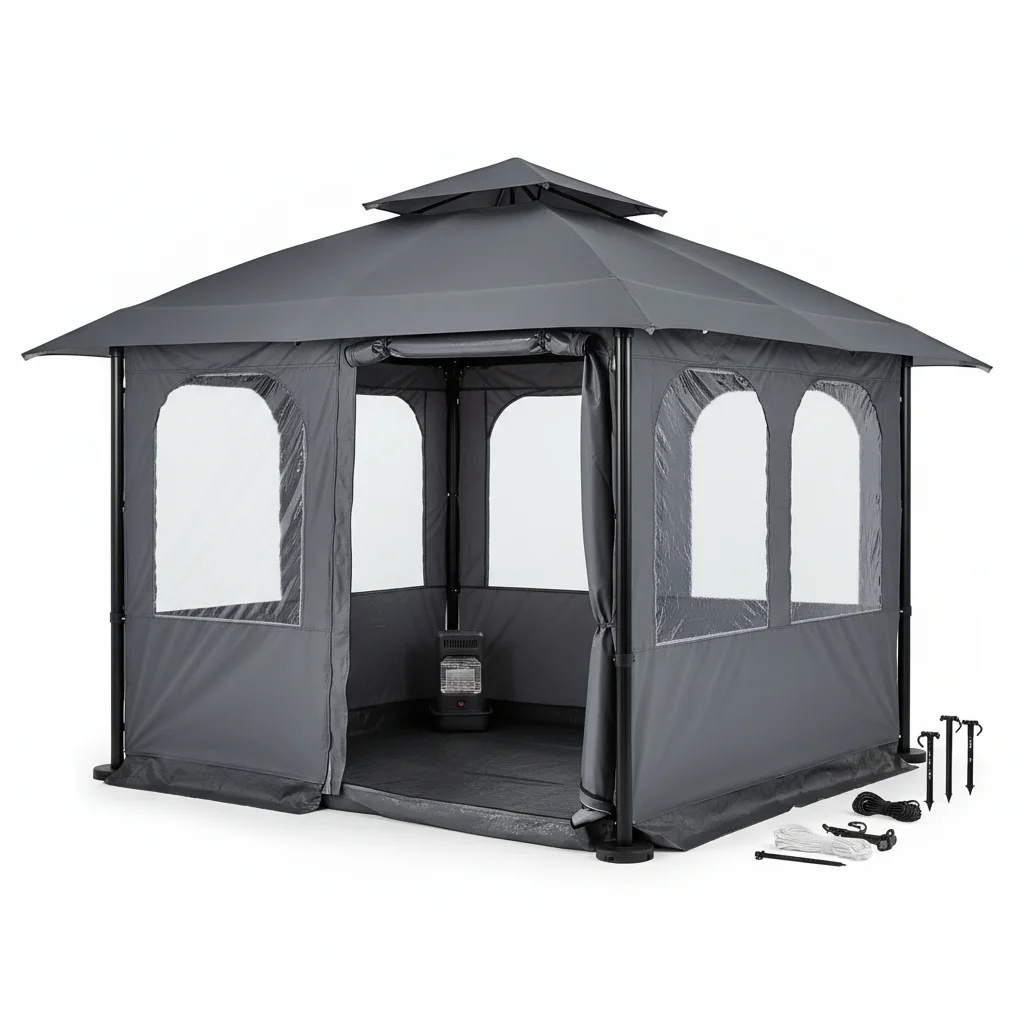
When selecting a gazebo tent for cold weather, the most crucial factors to consider are insulation, material durability, and wind resistance. A well-chosen cold-weather gazebo can extend your outdoor enjoyment well into the colder months, providing a sheltered and comfortable space for gatherings or relaxation. This guide will walk you through the essential features to look for to ensure your investment stands up to the chill.
Understanding Cold Weather Gazebo Tent Materials
The materials used in a cold weather gazebo tent are paramount for its performance. Look for heavy-duty polyester or canvas fabrics with a high denier count (e.g., 300D or higher) for the canopy and sidewalls. These materials offer better insulation and are more resistant to tearing and abrasion in harsh conditions. Additionally, some advanced models incorporate thermal linings or reflective layers to trap heat more effectively. The frame should ideally be made from robust steel or aluminum, capable of withstanding snow loads and strong winds without buckling.
Insulation and Heating Considerations
Effective insulation is key to staying warm. While most gazebos aren’t fully insulated like a house, certain features can significantly improve heat retention. Fully enclosed sidewalls, especially those with PVC windows, help block drafts and keep warmth inside. Some cold-weather specific models even offer insulated panels. For heating, ensure the gazebo tent has adequate ventilation if you plan to use a portable heater. Propane or electric heaters are common choices, but always prioritize safety and follow manufacturer guidelines for placement and use. Consider models with integrated vents or zippered openings that can be partially opened for air circulation.
- Heavy-duty fabric (300D+ polyester/canvas)
- Robust steel or aluminum frame
- Fully enclosed, draft-blocking sidewalls
- Ventilation options for safe heater use
- Snow load capacity for roof design
Wind and Snow Load Resistance
|
Our Picks for the Best Gazebo Tent in 2026
As an Amazon Associate I earn from qualifying purchases.
|
||
| Num | Product | Action |
|---|---|---|
| 1 | VEVOR 6 x 6 ft Pop up Screen House Tent, 4-6 Person Portable Screen Gazebo, with Carry Bag, Netting Sides & Ground Stakes, Quick Setup, Screened Canopy for Garden, Patio & Backyard, and Outdoor, Beige |

|
| 2 | Gazelle Tents™, G6 6-Sided Portable Gazebo, Easy Pop-Up Hub Screen Tent, Durable, TriTech Mesh, Waterproof, UV Resistant, 8-Person & Table, Desert Sand, 86" x 124" x 124", GG602DS |
|
| 3 | 12'x12' Camping Screen Tent - Portable Screen Canopy 8-10 Person&Instant UV Resistant Sun Shelter,Easy to Set Up&Mosquito Net Tent&Waterproof,Suitable for Family Camping Trip,Backyard,Picnic |
|
| 4 | Alvantor® Screen House Gazebo, Pop Up Igloo Screened Canopy Tent with Mosquito Netting Sides, Instant UV Resistant Sun Shelter for Garden, Patio, Backyard 2-6-10-15 Person |
|
| 5 | Alvantor® Screen House Gazebo, Pop Up Igloo Screened Canopy Tent with Mosquito Netting Sides, Instant UV Resistant Sun Shelter for Garden, Patio, Backyard 2-6-10-15 Person |
|
| 6 | East Oak Screen House Tent Pop-Up, Portable Screen Room Canopy Instant Screen Tent 10 x 10 FT with Carry Bag for Patio, Backyard, Deck & Outdoor Activities, Beige |
|
| 7 | LEEDOR Pop Up Screen House, 6-10-15 Person Outdoor Screen Tent,Camping Screen Room with Carry Bag, Screened Gazebo with Mosquito Netting, Instant UV Resistant Sun Shelter for Garden, Patio, Backyard |
|
| 8 | East Oak 12×12 FT Pop Up Canopy Tent with Mesh | Outdoor Screen House with 6 Sunshades | Instant Canopy with Portable Carry Bag | Gazebo Tent for Camping, Patio, and Beach | Beige |
|
| 9 | Screen House Tent 12x12ft Screen Room Mesh Gazebos w/ 2 Zipper Doors, Camping Tent Screened Canopy Shelter for Outdoor Patios Backyards Activities |
|
| 10 | Alvantor® Screen House Gazebo, Pop Up Igloo Screened Canopy Tent with Mosquito Netting Sides, Instant UV Resistant Sun Shelter for Garden, Patio, Backyard 2-6-10-15 Person |
|
Cold weather often brings strong winds and snow. A gazebo tent designed for these conditions will feature a sturdy frame, often with reinforced corners and thicker poles. The roof design also plays a critical role; pitched or sloped roofs are better at shedding snow and preventing accumulation, which can cause collapse. Look for models that specify a snow load capacity. Anchoring systems are also vital; ensure the tent comes with heavy-duty stakes and guy ropes, and consider additional weight bags or permanent anchors for extreme conditions.
Portability vs. Permanent Setup
Decide whether you need a portable gazebo for occasional cold-weather events or a more permanent structure for your backyard. Portable cold-weather gazebos are designed for easier setup and takedown, often featuring pop-up mechanisms, but may offer less robust protection than semi-permanent options. Permanent or semi-permanent gazebos, while requiring more effort to assemble, typically provide superior durability and insulation, making them ideal for year-round use in colder climates. Consider the frequency of use and the severity of your local winter weather when making this choice.
Additional Features for Winter Comfort
Beyond the core elements, several additional features can enhance your cold-weather gazebo experience. Integrated LED lighting can brighten dark winter evenings. Zippered doors and windows with durable zippers are essential for easy access and sealing out the elements. Some gazebos offer internal hooks for hanging lanterns or decorations. Ground skirts or mud flaps around the base can help prevent drafts from entering from below. Always check reviews for real-world performance in cold conditions before making a final decision.
