Heavy-duty gazebo tents are essential for year-round outdoor enjoyment in winter, offering superior protection against heavy snowfall and strong winds. Unlike standard models, these robust structures feature high snow load capacities (often 30-50 lbs/sq ft) and exceptional wind resistance (up to 100 MPH), ensuring your outdoor space remains safe and functional even in harsh conditions. This guide details critical features, types, and top brands to help you select a winter-ready gazebo for your home.
Understanding Heavy-Duty Gazebo Tents for Winter
Standard gazebos, often with soft fabric tops and lighter frames, simply aren’t built to withstand the rigors of winter. They can quickly succumb to the immense pressure of snow accumulation or the relentless force of strong winds, leading to damage or even collapse. Heavy-duty gazebos, however, are specifically designed to overcome these challenges, offering superior protection and durability. Their robust construction integrates critical requirements such as high snow load capacity and exceptional wind resistance, making them suitable for year-round use.
Snow Load Capacity: A Critical Measure
Snow load capacity refers to the maximum weight of snow a gazebo roof can safely support per unit area, typically measured in pounds per square foot (lbs/sq ft). This metric is paramount in regions experiencing significant snowfall. A 10-centimeter layer of wet snow can weigh roughly 20 lbs/sq ft, and inadequate capacity can lead to structural failure, posing serious safety risks. Heavy-duty models are engineered to handle substantial loads, with some capable of bearing 30-50 lbs/sq ft or even over 4,000 pounds of total snow, equivalent to about 30 inches of accumulation.
Wind Resistance: Standing Strong Against Storms
Wind resistance measures the maximum wind speed a gazebo can endure without shifting or collapsing. This rating, often expressed in miles per hour (MPH), is determined by the frame’s strength, the overall structural design, and the anchoring system. While many gazebos are rated for 50 MPH winds, premium heavy-duty options can withstand speeds up to 100 MPH, comparable to hurricane-force gusts. Features like robust frames, cross-bracing, and secure anchoring are vital in ensuring the gazebo remains stable against unpredictable winter storms.
Types of Heavy-Duty Gazebo Tents
When considering a gazebo for winter weather, the focus shifts away from temporary, soft-top structures toward more permanent or semi-permanent hardtop designs. These categories offer the strength and resilience needed to endure cold climates.
Permanent Hardtop Gazebos
Permanent hardtop gazebos are the epitome of outdoor durability, designed to become an integral part of your landscape for decades. They feature robust frames made of heavy-gauge steel, reinforced aluminum, or pressure-treated wood, coupled with solid roofs constructed from galvanized steel or impact-resistant polycarbonate panels. These structures demand a strong, fixed foundation and often require professional installation due to their weight and complexity. Their primary advantages include unparalleled resistance to snow, wind, and UV rays, ensuring a truly year-round usable space. However, this superior performance comes with higher costs and minimal portability.
Semi-Permanent Hardtop Gazebos
|
Our Picks for the Best Gazebo Tent in 2026
As an Amazon Associate I earn from qualifying purchases.
|
||
| Num | Product | Action |
|---|---|---|
| 1 | 12'x12' Camping Screen Tent - Portable Screen Canopy 8-10 Person&Instant UV Resistant Sun Shelter,Easy to Set Up&Mosquito Net Tent&Waterproof,Suitable for Family Camping Trip,Backyard,Picnic |

|
| 2 | Screen House Tent 12x12ft Screen Room Mesh Gazebos w/ 2 Zipper Doors, Camping Tent Screened Canopy Shelter for Outdoor Patios Backyards Activities |
|
| 3 | East Oak 12×12 FT Pop Up Canopy Tent with Mesh | Outdoor Screen House with 6 Sunshades | Instant Canopy with Portable Carry Bag | Gazebo Tent for Camping, Patio, and Beach | Beige |
|
| 4 | Gazelle Tents™, G6 6-Sided Portable Gazebo, Easy Pop-Up Hub Screen Tent, Durable, TriTech Mesh, Waterproof, UV Resistant, 8-Person & Table, Desert Sand, 86" x 124" x 124", GG602DS |
|
| 5 | Alvantor® Screen House Gazebo, Pop Up Igloo Screened Canopy Tent with Mosquito Netting Sides, Instant UV Resistant Sun Shelter for Garden, Patio, Backyard 2-6-10-15 Person |
|
| 6 | East Oak Screen House Tent Pop-Up, Portable Screen Room Canopy Instant Screen Tent 10 x 10 FT with Carry Bag for Patio, Backyard, Deck & Outdoor Activities, Beige |
|
| 7 | VEVOR 6 x 6 ft Pop up Screen House Tent, 4-6 Person Portable Screen Gazebo, with Carry Bag, Netting Sides & Ground Stakes, Quick Setup, Screened Canopy for Garden, Patio & Backyard, and Outdoor, Beige |
|
| 8 | Alvantor® Screen House Gazebo, Pop Up Igloo Screened Canopy Tent with Mosquito Netting Sides, Instant UV Resistant Sun Shelter for Garden, Patio, Backyard 2-6-10-15 Person |
|
| 9 | LEEDOR Pop Up Screen House, 6-10-15 Person Outdoor Screen Tent,Camping Screen Room with Carry Bag, Screened Gazebo with Mosquito Netting, Instant UV Resistant Sun Shelter for Garden, Patio, Backyard |
|
| 10 | Alvantor® Screen House Gazebo, Pop Up Igloo Screened Canopy Tent with Mosquito Netting Sides, Instant UV Resistant Sun Shelter for Garden, Patio, Backyard 2-6-10-15 Person |
|
Semi-permanent hardtop gazebos offer a balanced solution, providing significant durability without the full commitment of a permanent installation. They typically feature strong, powder-coated aluminum or steel frames and hardtop roofs of galvanized steel or polycarbonate. While still robust enough for year-round use in many climates, they may be easier to assemble than fully permanent models and can be disassembled if needed, though with considerable effort. These gazebos strike an excellent balance between structural integrity and a degree of flexibility, often incorporating pre-drilled bases for secure anchoring to patios or decks.
Key Features of Winter-Ready Gazebo Tents
Selecting a gazebo that can brave winter requires careful attention to its core components.
Frame Materials
The frame is the skeleton of your gazebo, determining its overall strength and longevity.
- Steel: Considered the strongest frame material, steel is ideal for areas with heavy snow loads and high winds. For optimal performance, it must be powder-coated or galvanized to prevent rust and corrosion.
- Aluminum: Lightweight and inherently rust-resistant, aluminum frames are popular for their low maintenance. For winter conditions, opt for heavy-gauge or reinforced aluminum, often powder-coated for added durability.
- Pressure-Treated Wood: Offering a classic aesthetic, pressure-treated wood resists rot and insects. When chosen for winter, ensure it features thick, sturdy posts (e.g., 4×4 inches) and requires regular sealing to maintain its strength.
Roof Design
A critical component for winter performance, the roof must be designed to manage snow and ice.
- Hardtop Construction: Absolutely essential for winter. Materials like galvanized steel or polycarbonate panels are rigid, durable, and capable of supporting snow weight. Soft-top fabric roofs should always be removed before winter.
- Sloped or Pitched Roofs: A fundamental feature for snowy climates. A steep pitch allows snow to slide off naturally, preventing dangerous accumulation and structural stress.
- Double-Tiered/Vented Roofs: While primarily designed for airflow in warmer months, this dual-layer design also enhances structural integrity and helps equalize pressure, which can be beneficial under snow loads.
Anchoring Systems
Even the strongest frame needs a secure foundation. Proper anchoring is vital for preventing your gazebo from shifting or being uplifted by high winds. Look for systems that include heavy-duty powder-coated steel anchoring plates with concrete screws, designed to fasten the structure securely to a concrete slab, wooden deck, or reinforced footings.
Enclosure Options
Many heavy-duty gazebos come with removable sidewalls, curtains, or mosquito netting. While these enhance comfort in warmer seasons, it’s crucial to remove and store all fabric accessories during winter. They can trap moisture, collect snow and ice, and significantly increase wind resistance, potentially damaging the structure.
Comparison of Heavy-Duty Gazebo Tent Types
| Feature | Permanent Hardtop | Semi-Permanent Hardtop |
|---|---|---|
| Durability | Highest (decades of use) | High (many years with proper care) |
| Winter Suitability | Excellent (engineered for extreme snow/wind loads) | Very Good (robust for year-round use in most climates) |
| Frame Material | Heavy-Gauge Steel, Pressure-Treated Wood, Reinforced Aluminum | Powder-Coated Aluminum, Steel |
| Roof Material | Galvanized Steel, Thick Polycarbonate Panels | Galvanized Steel, Polycarbonate Panels |
| Mobility | Very Low (requires fixed foundation, complex to move) | Low to Medium (can be disassembled, not easily portable) |
| Installation | Complex, often requires professional assistance | Moderate, often manageable with advanced DIY skills |
| Cost | High-End Investment | Mid to High-Range Investment |
| Maintenance | Low (frame), regular snow removal, occasional roof inspection | Low (frame), regular snow removal, occasional roof inspection |
How to Choose the Best Heavy-Duty Gazebo Tent
Selecting the right winter-ready gazebo involves evaluating several key factors to match your specific needs and local conditions.
Assess Your Local Climate
Begin by understanding the average snowfall, maximum wind speeds, and typical winter temperatures in your area. This will help you identify the minimum snow load and wind resistance ratings required. Consulting local building codes might also be necessary, especially for larger or more permanent structures.
Determine Purpose and Size
Consider how you intend to use your gazebo during the winter. Will it shelter a hot tub, create an outdoor dining area, or serve as a cozy relaxation spot? The purpose will dictate the ideal size and any additional features, such as integrated heating or lighting. Ensure the chosen dimensions comfortably fit your space and accommodate all planned activities.
Evaluate Materials and Construction
Prioritize gazebos constructed with heavy-duty frames (steel or reinforced aluminum) and hardtop roofs (galvanized steel or sturdy polycarbonate). Look for indicators of robust construction, such as thick support posts, reinforced joints and brackets, and cross-beam supports under the roof. These details significantly contribute to the gazebo’s ability to withstand extreme weather.
Check Snow Load and Wind Ratings
Do not compromise on these crucial specifications. Always verify the manufacturer’s stated snow load capacity (lbs/sq ft) and wind resistance (MPH). Aim for ratings that comfortably exceed the typical and even extreme winter conditions in your region. This is a non-negotiable step for ensuring safety and longevity.
Consider Installation and Maintenance
Think about the installation process. Will you undertake it as a DIY project, or will you need professional assistance? Many heavy-duty models can be complex to assemble, sometimes requiring multiple people. Also, consider ongoing maintenance, such as the ease of snow removal and any specific requirements for material upkeep (e.g., resealing wood, checking coatings on metal).
Top Brands for Winter-Ready Gazebo Tents
Several manufacturers have established reputations for producing heavy-duty, winter-ready gazebos.
- Sunjoy: Renowned for their durable steel hardtop gazebos, Sunjoy models often boast impressive wind ratings (e.g., 50 MPH) and significant snow load capacities (e.g., over 4,000 lbs). Their designs frequently feature ventilated two-tier roofs and weather-resistant finishes.
- Backyard Discovery: This brand offers gazebos with their proprietary PRO-TECT™ Tested and Proven standards, certifying resistance to up to 30 inches of snow and 100 MPH winds. Their structures often combine galvanized steel roofs with durable cedar wood frames, anchored securely for maximum stability.
- Kozyard, Alexander, JolyDale, GarveeLife, YOLENY, Aoxun, and Modern Resistant: These brands are frequently mentioned in reviews for their hardtop gazebos, often featuring galvanized steel or polycarbonate roofs, robust aluminum or steel frames, and designs focused on wind and snow resistance.
- Barrington Gazebo: Noted for exceptional load-bearing capabilities, with some models boasting over 9,000 pounds of roof load capacity and 100 MPH wind resistance, often including useful features like electrical outlets.
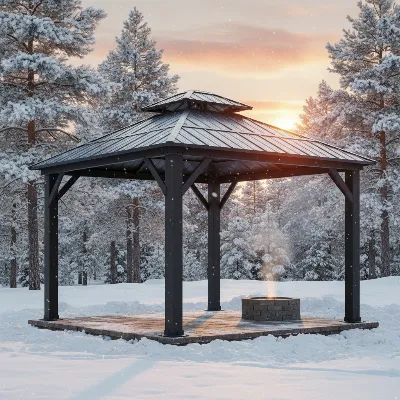 A robust hardtop gazebo stands strong amidst a snowy winter landscape, featuring a steeply pitched roof and sturdy steel frame, designed for heavy snow loads.
Maintenance Tips for Year-Round Durability
Proper maintenance is crucial for extending the lifespan of your heavy-duty winter gazebo and ensuring its safety.
Regular Snow Removal
Even the strongest gazebos benefit from regular snow removal. It’s best practice to clear snow when it reaches 30-40% of the roof’s rated capacity, rather than waiting for visible sagging. Use a soft broom or a purpose-designed snow rake to gently push snow off, always avoiding shovels or abrasive tools that could damage the roof.
Inspect and Secure
Periodically inspect your gazebo’s entire structure. Tighten any loose bolts, screws, or connections, and check for signs of rust or corrosion on metal frames. Addressing these issues proactively will prevent minor problems from escalating into major structural concerns.
Remove Fabric Components
Before winter sets in, remove all fabric accessories, including curtains, sidewalls, and mosquito netting. Store them in a dry, ventilated area. These materials can collect moisture, ice, and snow, increasing the risk of tearing or structural strain during storms.
Clear Drainage
Ensure that the roof’s drainage system, including any gutters or sloped edges, is free from debris. Proper drainage prevents water from pooling and freezing, which can add significant weight and stress to the structure.
Conclusion
Investing in a heavy-duty gazebo tent for winter weather is a smart decision for anyone desiring to maximize their outdoor living space year-round. By prioritizing models with robust hardtop roofs, strong frames made of steel or reinforced aluminum, and high snow load and wind resistance ratings, you can create a safe, durable, and comfortable sanctuary. Remember the importance of secure anchoring and diligent maintenance, especially regular snow removal, to ensure your gazebo stands strong against the harshest elements. With the right choice, your outdoor space can remain an inviting retreat, regardless of the season.
What winter activities will your new heavy-duty gazebo tent host this year?
Frequently Asked Questions
Can a regular pop-up gazebo withstand winter snow?
No, most regular pop-up or soft-top gazebos are not designed to withstand winter snow and high winds. Their lightweight frames and fabric canopies are prone to collapse under heavy snow loads and should be stored during harsh winter months to prevent damage.
What is a good snow load capacity for a winter gazebo?
For a winter gazebo, a good snow load capacity is typically 30-50 pounds per square foot or more, especially if you live in a region with heavy snowfall. Always consult the manufacturer’s specifications to ensure it meets or exceeds your local requirements.
How much wind can a heavy-duty gazebo withstand?
Heavy-duty gazebos are engineered for significant wind resistance, with many models rated to withstand 50 MPH winds. Premium designs, especially those with robust frames and secure anchoring, can be tested to resist up to 100 MPH winds, comparable to hurricane-force conditions.
Is aluminum or steel better for a winter gazebo frame?
Steel is generally superior for extreme winter conditions, offering greater strength for very heavy snow or strong winds, provided it has a rust-resistant coating. Heavy-gauge, powder-coated aluminum is also an excellent, rust-resistant choice for moderate winter conditions, balancing strength with a lighter weight.
Do I need to anchor my winter gazebo to the ground?
Yes, it is crucial to securely anchor your winter gazebo to a stable foundation, such as a concrete slab or reinforced deck. Using strong anchoring plates and concrete screws helps prevent the structure from shifting, lifting, or toppling over during high winds and heavy snowfalls.
How often should I remove snow from my gazebo roof?
It is recommended to remove snow from your gazebo roof regularly, ideally after each snowfall, and before the accumulation reaches 30-40% of the roof’s rated snow load. Use a soft broom or a snow rake to gently clear the snow, avoiding shovels that could damage the roof.
What features make a gazebo roof good for winter?
A winter-ready gazebo roof should be a hardtop, made from durable materials like galvanized steel or polycarbonate. Crucially, it needs a steep pitch or slope to naturally shed snow and prevent buildup. Double-tiered roof designs also enhance stability and structural integrity against winter elements.
Frequently Asked Questions
Can a regular pop-up gazebo withstand winter snow?
No, most regular pop-up or soft-top gazebos are not designed to withstand winter snow and high winds. Their lightweight frames and fabric canopies are prone to collapse under heavy snow loads and should be stored during harsh winter months to prevent damage.
What is a good snow load capacity for a winter gazebo?
For a winter gazebo, a good snow load capacity is typically 30-50 pounds per square foot or more, especially if you live in a region with heavy snowfall. Always consult the manufacturer's specifications to ensure it meets or exceeds your local requirements.
How much wind can a heavy-duty gazebo withstand?
Heavy-duty gazebos are engineered for significant wind resistance, with many models rated to withstand 50 MPH winds. Premium designs, especially those with robust frames and secure anchoring, can be tested to resist up to 100 MPH winds, comparable to hurricane-force conditions.
Is aluminum or steel better for a winter gazebo frame?
Steel is generally superior for extreme winter conditions, offering greater strength for very heavy snow or strong winds, provided it has a rust-resistant coating. Heavy-gauge, powder-coated aluminum is also an excellent, rust-resistant choice for moderate winter conditions, balancing strength with a lighter weight.
Do I need to anchor my winter gazebo to the ground?
Yes, it is crucial to securely anchor your winter gazebo to a stable foundation, such as a concrete slab or reinforced deck. Using strong anchoring plates and concrete screws helps prevent the structure from shifting, lifting, or toppling over during high winds and heavy snowfalls.
How often should I remove snow from my gazebo roof?
It is recommended to remove snow from your gazebo roof regularly, ideally after each snowfall, and before the accumulation reaches 30-40% of the roof's rated snow load. Use a soft broom or a snow rake to gently clear the snow, avoiding shovels that could damage the roof.
How to Choose the Best Heavy-Duty Gazebo Tent
Selecting a winter-ready gazebo involves evaluating several key factors to match your specific needs and local conditions, ensuring durability and safety.
Understand the average snowfall, maximum wind speeds, and typical winter temperatures in your area. This helps identify the minimum snow load and wind resistance ratings required for your gazebo. Consult local building codes for larger or more permanent structures.
Consider how you intend to use your gazebo during the winter, whether for a hot tub, dining, or relaxation. The purpose dictates the ideal size and any additional features like heating or lighting. Ensure dimensions fit your space and planned activities.
Prioritize gazebos with heavy-duty frames (steel or reinforced aluminum) and hardtop roofs (galvanized steel or sturdy polycarbonate). Look for robust construction indicators like thick support posts, reinforced joints, and cross-beam supports under the roof. These details are crucial for extreme weather resistance.
Always verify the manufacturer's stated snow load capacity (lbs/sq ft) and wind resistance (MPH). Aim for ratings that comfortably exceed typical and extreme winter conditions in your region. This is a non-negotiable step for ensuring safety and longevity.
Think about the installation processu2014DIY or professional assistance. Many heavy-duty models are complex to assemble. Also, consider ongoing maintenance, such as ease of snow removal and specific material upkeep requirements like resealing wood or checking metal coatings.

We got a heavy-duty gazebo for our outdoor events business, and the wind resistance has been impressive. We’ve seen gusts up to 60 MPH, and it barely budged. My only minor complaint is that the setup took a bit longer than expected, even with two people. But once it’s up, it’s incredibly sturdy and reliable.
I was looking for something to keep our patio furniture covered through the winter. I picked up one of the mid-range heavy-duty options. It’s good for light snow, but I’m a little concerned about its performance in really heavy snowfall, despite the claims. I might need to reinforce it or clear snow more frequently than I hoped.
This guide really helped me understand the difference between standard and heavy-duty gazebos. I used to just buy whatever was on sale, but after a few collapses, I realized the importance of features like strong wind resistance. Our new gazebo has been fantastic, even through some pretty intense winter storms here in Colorado.
I finally invested in one of the heavy-duty gazebo tents mentioned, specifically a model with a 50 lbs/sq ft snow load capacity. It’s been a game-changer for our backyard in upstate New York. We’ve had a few decent snowfalls already, and it’s held up perfectly, no sagging or worries about collapse. Definitely worth the extra cost for peace of mind during winter.