For farmers market vendors, a commercial-grade gazebo tent is essential for business success, offering superior durability, weather protection, and a professional image compared to recreational models. These tents are engineered for rigor and reliability, built to withstand unpredictable outdoor elements and frequent setup. Investing in a high-quality commercial tent, typically costing $300 to over $1,000, provides long-term value by safeguarding products, ensuring customer comfort, and enhancing brand presence.
Understanding Commercial Grade Gazebo Tents
A “commercial grade” gazebo tent is specifically engineered for rigor, reliability, and repeat performance, distinguishing it from recreational tents. Unlike models designed for occasional backyard use, commercial tents are built to endure the unpredictable conditions of outdoor markets and the demands of frequent assembly and disassembly. They offer superior protection, greater stability, and a significantly longer lifespan, making them a worthwhile long-term investment for any serious vendor.
While the initial cost of a commercial-grade tent is higher, it represents an investment in your business’s future. Cheaper tents often fail under strong winds or heavy rain, leading to damaged products, lost sales, and the need for constant replacements. A robust commercial tent, conversely, provides peace of mind, allowing vendors to focus on customers and products with a secure and professional setup.
Key Features of a Superior Farmers Market Gazebo Tent
Choosing the right gazebo requires evaluating its functional features beyond aesthetics. A top-tier commercial gazebo tent must perform flawlessly day after day.
Frame Durability and Stability
The frame is the structural foundation of your gazebo, directly influencing its overall stability and resistance to wind. Commercial-grade frames are constructed from heavy-duty materials, surpassing the lightweight components found in recreational models.
- Materials: Prioritize frames made from powder-coated steel or reinforced aluminum. Aluminum offers an excellent strength-to-weight ratio, making it lighter for transport without compromising stability. Steel frames are often heavier but provide exceptional robustness.
- Leg Profiles: Hexagonal or octagonal leg profiles offer greater structural integrity and wind resistance compared to standard square or round profiles.
- Reinforced Joints: Commercial tents feature reinforced, often bolted or profile aluminum, joints engineered for long-term durability and seamless operation. This design prevents the common bending and breaking seen in cheaper cast alloy alternatives.
Canopy Fabric: Protection and Longevity
The canopy serves as the primary shield against environmental elements, with its quality directly impacting protection and the tent’s lifespan.
- Material: High-denier polyester, typically 600D (denier) or higher, is the industry standard for commercial canopies. This thick, woven fabric provides superior tear resistance and durability.
- Waterproof and UV Protection: A true commercial canopy is 100% waterproof and offers significant UV protection, often rated UPF 50+. This protects products from rain and sun damage, and staff from harmful rays.
- Fire Retardancy: Essential for food vendors or in regulated markets, some commercial canopies come with fire-retardant certifications, meeting safety standards for public events.
Ease of Setup and Portability
|
Our Picks for the Best Gazebo Tent in 2026
As an Amazon Associate I earn from qualifying purchases.
|
||
| Num | Product | Action |
|---|---|---|
| 1 | East Oak 12×12 FT Pop Up Canopy Tent with Mesh | Outdoor Screen House with 6 Sunshades | Instant Canopy with Portable Carry Bag | Gazebo Tent for Camping, Patio, and Beach | Beige |

|
| 2 | 12'x12' Camping Screen Tent - Portable Screen Canopy 8-10 Person&Instant UV Resistant Sun Shelter,Easy to Set Up&Mosquito Net Tent&Waterproof,Suitable for Family Camping Trip,Backyard,Picnic |
|
| 3 | Screen House Tent 12x12ft Screen Room Mesh Gazebos w/ 2 Zipper Doors, Camping Tent Screened Canopy Shelter for Outdoor Patios Backyards Activities |
|
| 4 | Alvantor® Screen House Gazebo, Pop Up Igloo Screened Canopy Tent with Mosquito Netting Sides, Instant UV Resistant Sun Shelter for Garden, Patio, Backyard 2-6-10-15 Person |
|
| 5 | Gazelle Tents™, G6 6-Sided Portable Gazebo, Easy Pop-Up Hub Screen Tent, Durable, TriTech Mesh, Waterproof, UV Resistant, 8-Person & Table, Desert Sand, 86" x 124" x 124", GG602DS |
|
| 6 | Alvantor® Screen House Gazebo, Pop Up Igloo Screened Canopy Tent with Mosquito Netting Sides, Instant UV Resistant Sun Shelter for Garden, Patio, Backyard 2-6-10-15 Person |
|
| 7 | Alvantor® Screen House Gazebo, Pop Up Igloo Screened Canopy Tent with Mosquito Netting Sides, Instant UV Resistant Sun Shelter for Garden, Patio, Backyard 2-6-10-15 Person |
|
| 8 | LEEDOR Pop Up Screen House, 6-10-15 Person Outdoor Screen Tent,Camping Screen Room with Carry Bag, Screened Gazebo with Mosquito Netting, Instant UV Resistant Sun Shelter for Garden, Patio, Backyard |
|
| 9 | East Oak Screen House Tent Pop-Up, Portable Screen Room Canopy Instant Screen Tent 10 x 10 FT with Carry Bag for Patio, Backyard, Deck & Outdoor Activities, Beige |
|
| 10 | VEVOR 6 x 6 ft Pop up Screen House Tent, 4-6 Person Portable Screen Gazebo, with Carry Bag, Netting Sides & Ground Stakes, Quick Setup, Screened Canopy for Garden, Patio & Backyard, and Outdoor, Beige |
|
Farmers market mornings demand quick and efficient tent setup, ideally by one person.
- Pop-Up Design: Commercial-grade gazebos almost exclusively feature a pop-up or instant setup design, allowing assembly in just minutes without special tools.
- Quick-Latch Systems: These intuitive systems secure the frame rapidly, making setup and takedown smoother and faster.
- Wheeled Carrying Bags: Many robust commercial tents include wheeled carrying bags, significantly easing transport, especially for heavier models.
- Overall Weight: While heavy-duty implies more weight, a good commercial tent balances stability with manageability for transport, typically weighing at least 25kg for a 3x3m model.
Size Considerations
Selecting the correct size ensures compliance with market regulations and provides ample space for your display.
- Standard 10×10 feet (3x3m): This is the most common size for farmers market vendors, fitting standard booth spaces and providing enough room for tables, displays, and storage.
- Larger Options: For busier markets or more extensive product setups, 10×15 feet (3×4.5m) or 10×20 feet (3x6m) tents offer more flexibility, but always confirm market regulations first.
Customization and Branding Options
Your gazebo tent functions as a mobile billboard, making customization crucial for standing out and reinforcing brand identity.
- Sidewalls: Removable sidewalls offer added protection against wind and rain, provide privacy, and can be customized with clear windows or mesh screens.
- Printed Logos and Designs: Many commercial tent suppliers offer professional printing services to display your logo, business name, or promotional messages in vibrant colors directly on the canopy or sidewalls.
- Accessories: Awnings, counters, and rail skirts can enhance functionality and visual appeal, creating a more inviting and professional booth.
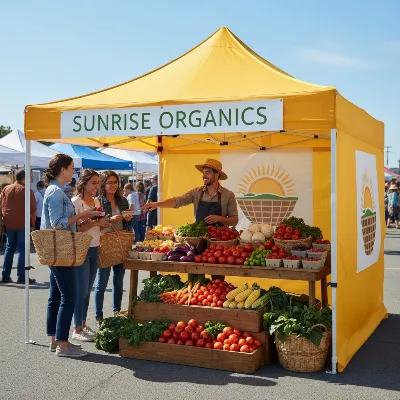 A vibrant commercial-grade gazebo tent with custom branding set up at a bustling farmers market, showcasing fresh produce and attracting customers.
Comparison of Commercial Gazebo Tent Attributes
Understanding the differences between various grades of tents helps in making an informed decision:
| Feature | Basic Pop-Up (Not Commercial) | Standard Commercial Grade | Heavy-Duty Commercial Grade |
|---|---|---|---|
| Frame Material | Thin Steel/Fiberglass | Powder-Coated Steel / Hexagonal Aluminum | Reinforced Aluminum / Octagonal Aluminum |
| Canopy Fabric | Lightweight Polyester (200D-300D) | 400D-600D Waterproof/UV | 600D+ Fire Retardant, UV50+ |
| Durability | Low (1-2 seasons) | Medium-High (several seasons) | Very High (many seasons, lifetime warranty) |
| Wind Resistance | Poor | Moderate | Excellent |
| Portability | Very High (lighter) | High (with wheeled bag) | Moderate (heavier, but sturdy) |
| Price Range | Low | Mid-Range | High |
Leading Brands for Farmers Market Gazebo Tents
Several reputable brands specialize in commercial-grade gazebo tents suitable for farmers markets, consistently mentioned for their quality and performance:
- Gala Tent (Gala Shade Pro series): Known for robust aluminum frameworks and strong, durable canopies, favored by market traders for over two decades. Their Pro Pop Up 40, 50, and 60 series offer varying levels of heavy-duty construction.
- E-Z UP: A pioneer in instant pop-up canopies, E-Z UP offers a range of professional and medium-duty shelters known for tool-free setup, strong warranties, and quality materials.
- TentCraft (MONARCHTENT, ExtremeCanopy X6): These brands emphasize “business-grade” pop-up canopies with heavy-duty aluminum frames and hexagonal leg profiles, designed for extreme durability and ease of setup by one person.
- Quictent: Offers heavy-duty, easy-up commercial pop-up canopies with robust frameworks, high-denier waterproof, and UPF-rated fabrics, often with fire-retardant options.
- MasterCanopy: Provides premium farmers market tents focusing on durability, effortless setup, and extensive customization options to boost brand visibility.
These brands often stand out due to their commitment to higher quality materials, robust engineering, and customer support, including warranties and replacement parts.
Tips for Maintaining Your Commercial Gazebo Tent
Even the toughest commercial gazebo tent requires proper care to ensure its longevity and performance.
- Regular Cleaning: After each use, clean the canopy and frame. Use mild soap and water for the fabric, and wipe down the frame to prevent dirt buildup and rust. Ensure the canopy is completely dry before packing to prevent mildew.
- Proper Storage: Store your tent in its wheeled carrying bag in a cool, dry place, away from direct sunlight or extreme temperatures. This protects the fabric and frame from degradation.
- Inspecting for Damage: Before and after each event, inspect the frame for any bends, cracks, or loose joints. Check the canopy for small tears or holes. Addressing minor issues promptly can prevent them from becoming major problems.
- Securing the Tent: Always use leg weights (at least 25-40 lbs per leg) and/or stakes, even on calm days. Many market regulations require this for safety. Wind can unexpectedly pick up, turning an unsecured tent into a dangerous projectile.
“A robust commercial gazebo isn’t just about weathering the storm; it’s about projecting professionalism and confidence, which directly translates to customer trust and sales.” – Admin, ReviewKari.com, Experienced Gazebo Technician
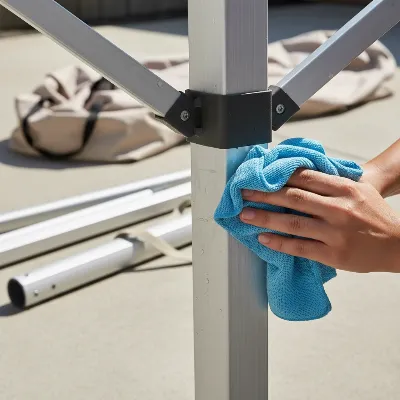 A person cleaning and inspecting a commercial gazebo tent frame, emphasizing proper maintenance for longevity.
Conclusion
For any vendor at a farmers market, a commercial-grade gazebo tent is an indispensable asset. It safeguards your valuable products, protects you and your customers from unpredictable weather, and creates a professional, inviting space that enhances your brand’s presence. By prioritizing features like a strong frame, durable, weather-resistant fabric, ease of setup, and smart customization options, you can make a wise investment that will serve your business reliably for many seasons to come. Don’t compromise on quality when your livelihood depends on it. Choose a gazebo tent that works as hard as you do, and watch your market presence flourish.
Frequently Asked Questions
Frequently Asked Questions
How much does a good commercial gazebo tent cost?
A commercial-grade gazebo tent typically costs between $300 and over $1,000, depending on size, materials, and features. While this is a higher upfront investment than recreational tents, its extended lifespan and superior protection offer better long-term value for your business.
Can I set up a commercial gazebo by myself?
Many commercial-grade pop-up gazebo tents are designed for quick, easy assembly, with some models explicitly allowing for single-person setup in minutes. Features like quick-latch systems and lightweight aluminum frames facilitate solo setup, though a second person can make the process faster and safer, especially for larger or heavier models.
What is the best size for a farmers market stall?
The most common and widely accepted size for a farmers market stall is 10x10 feet (3x3 meters). This dimension typically fits standard market pitch regulations and provides ample space for tables, product displays, and vendor movement. Always confirm with market organizers for specific size requirements.
Are fire-retardant canopies mandatory for market use?
Fire-retardant canopies may be mandatory in certain markets, particularly for food vendors or in crowded event settings, due to local safety regulations. It is crucial to check with your specific farmers market or local authorities for their requirements. Investing in a certified fire-retardant canopy is a smart safety measure, even if not strictly required.
How do I secure my gazebo in windy conditions?
To secure your gazebo, always use heavy-duty leg weights, with a minimum of 25-40 pounds per leg, and sturdy ground stakes, especially on soft terrain. Ensure all ropes and tie-downs are properly fastened. Some manufacturers also offer optional wind bars or additional bracing kits for enhanced stability in exceptionally windy conditions.

This guide was really helpful in understanding the difference between commercial and recreational tents. I ended up getting one in the $500 range, and it’s been fantastic for protecting my produce from the sun and unexpected drizzles. Setup is still a bit of a workout, but it feels super sturdy once it’s up.
As a long-time vendor, I can attest to the importance of a high-quality commercial tent. My last one lasted years, even with frequent setup and takedown. The superior weather protection means I don’t have to worry about my handmade goods getting damaged, which is priceless.
I bought one of the recommended commercial gazebo tents, and while it’s definitely robust and looks professional, I found the weight to be a bit much for one person to manage. It’s great for weather protection, but I wish it was a little easier to transport and assemble by myself for those early market mornings.
I finally upgraded to a commercial-grade gazebo tent for my farmers market stall, and it’s made a huge difference. The durability is exactly what I needed; it handles windy days so much better than my old recreational one. Definitely worth the investment for anyone serious about their market business.